


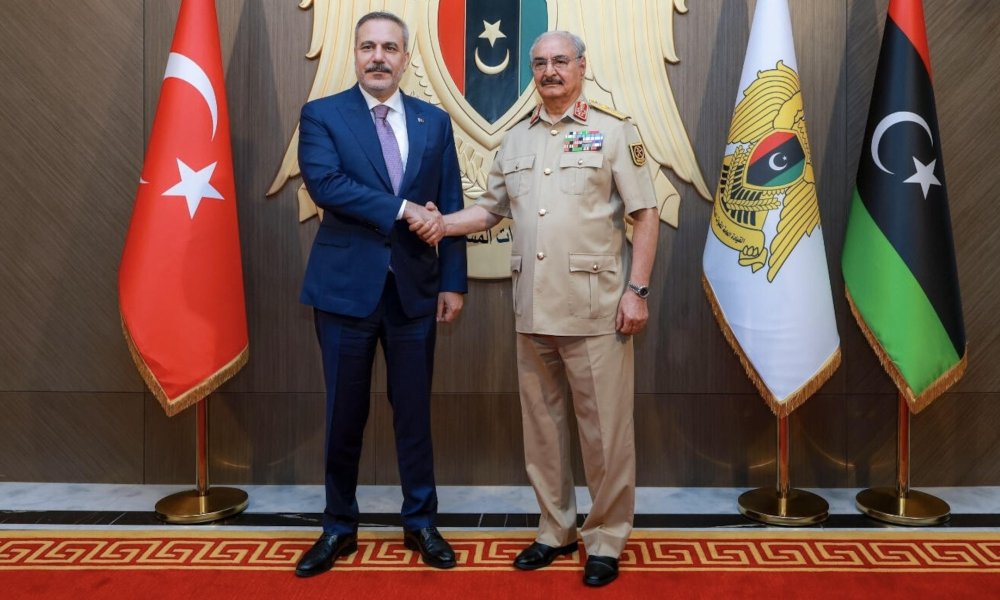

Libya’s eastern parliament has unanimously approved the maritime border agreement that the Government of National Accord signed with Turkey in 2019, five years after rejecting it in 2020. This means it is now recognised by both parts of the country. The European Commission does not recognise the deal, which redefines territorial boundaries, and has backed Greece and Cyprus, which consider the agreement unlawful.
Open/close all quotes
Pressure on Benghazi warranted
Athens and Brussels must react immediately, Phileleftheros cautions:
“Greece must take action and extend its territorial waters twelve nautical miles beyond the south and west coast of Crete. Tolerance is no longer appropriate. What this parliamentary decision confirms is that Turkey is to a large extent in control of developments and events in Libya. It has a firm grip on the situation in a country plagued by serious internal problems. … A reaction must therefore be expected from Greece, which has the full support of the European Union. One important aspect of these developments is the European Union’s scope for exerting pressure on eastern Libya, for example by cutting off funding to Benghazi for migration control.”
Only lukewarm words for Athens so far
Greece is in a very difficult position, Naftemporiki stresses:
“Despite the reaction from the Greek Foreign Ministry, the message from the Commission’s leadership has been only lukewarm so far. There have been many words of support, but no warning to Libya that tough measures will follow if it doesn’t immediately revoke its unlawful decision. This decision infringes upon Greece’s sovereign rights and bolsters Ankara’s illegal and revisionist claims to the ‘Blue Homeland’ in the Aegean and the eastern Mediterranean. … Nor should we forget Libya’s oil and natural gas reserves, which Europe urgently needs in these times of energy crisis. … Athens will have a hard time finding allies to exert pressure on Libya.”
No getting around Ankara any more
Ankara’s policy on Libya is finally bearing fruit, Yetkin Report concludes:
“Turkey has gone from being a supporter of one side in Libya to a player capable of cooperating with both of the country’s major power centres. It is precisely this transformation that Greece was unable to prevent. … Turkey’s most significant success to date is not that it has driven its rivals out of the eastern Mediterranean. That is not possible anyway. Israel, Greece and Cyprus are permanent players in the region. The EU and the US will also continue to exert influence over the region’s energy and security projects. What Ankara has achieved is something else. Turkey is making it increasingly difficult and costly to establish an order in the eastern Mediterranean in which it is not included.”