
Commentary
No one doubts the nation has the skill. What it needs now is the will, says Gearoid Reidy for Bloomberg Opinion.
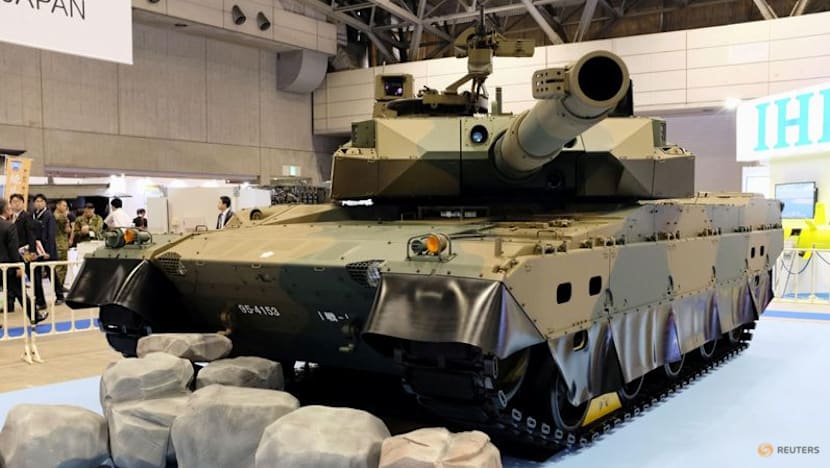
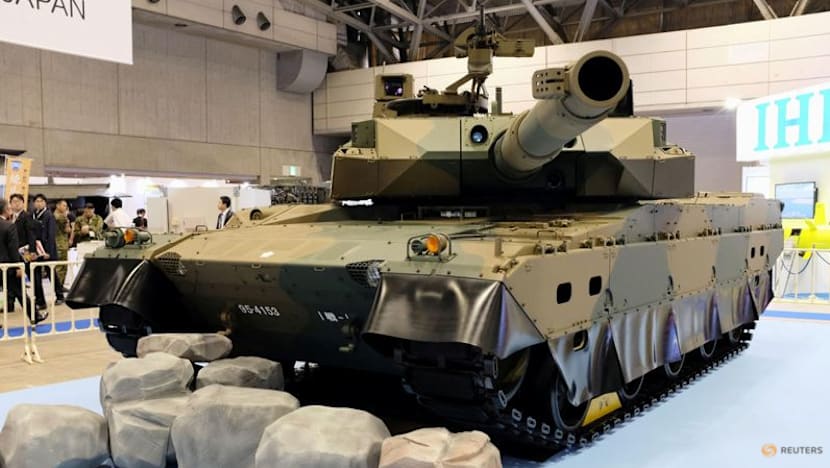
TOKYO: Japan’s decision to lift restrictions on the export of lethal arms has many hoping the country can be the defence supplier to the world. Ending this decades-old taboo would have been politically unthinkable just a decade ago. Nonetheless, this is the easy part.
The real task now will be growing the defence industry quickly enough to be competitive and relevant amid a surge in global demand. Given the sector has suffered from decades of underinvestment, and Japan’s urgent need to boost military spending, Tokyo must work fast to meet its own requirements, much less anyone else’s.
The significance of this week’s step shouldn’t be understated. The self-imposed limitations on selling military equipment abroad, first adopted in 1967 and expanded into a near-total ban in 1976, were a reflection of the country’s strict pacifist stance post-World War II.
They were completely voluntary – nothing in the constitution explicitly prevents such exports – and increasingly anachronistic.
But making changes to this posture is politically risky: A Jiji poll last month showed just 27 per cent support lifting the ban, with nearly a majority opposed. Had this happened a decade ago, there might have been tens of thousands on the streets protesting.
AN ENDURING GOAL OF JAPANESE HAWKS
Credit to Prime Minister Sanae Takaichi for getting it through. It might be tempting to look from outside and assume this is a response to the Trump administration and its damage to long-standing alliances. But this has been an enduring goal of hawks within the ruling Liberal Democratic Party, such as Takaichi.
The late Shinzo Abe first began to loosen the restrictions in 2014. It’s all part of a normalisation of Japan’s stance that has accelerated at record pace since Russia’s invasion of Ukraine. It’s little exaggeration to say there have been more changes in the last five years than in the previous five decades.
They are everywhere to be seen, from deployment of the first homegrown counterstrike missiles in Kumamoto, to the Self-Defense Forces taking part in combat drills with the US and the Philippines for the first time.
As concern grows about both China’s aggression and Washington’s increasing reluctance to be the backstop of regional peace, more and more Asian nations are looking to Tokyo, politically and logistically, to fill the void.
It’s also an opportunity for Japan itself. Much like Germany, it can move excess capacity from industries like the auto sector into defence manufacturing. A key adviser to Takaichi has noted how the economy has suffered from lack of government-led military investment.
In 2024, Japan set up a dual-use research institute modelled on America’s Defense Advanced Research Projects Agency (DARPA), but the scale is still minuscule in comparison. The government needs to be at the forefront if it is to be the new weapons factory of the free world.
MUCH WORK TO DO
There is a lot of work to do first. Like many areas of the economy, the industry has suffered from chronic underinvestment. For years, the only customer was the government, which until recently capped spending on defence at 1 per cent of gross domestic product. Even after that changed, the bulk of investment went into US technology.
With onerous supply chain demands, security was seen as high-cost and low-profit; government contracts capped profit margins, and ESG funds shied away from investing in firms that built arms. All that led multiple players, who for decades were unable to access the market in the rest of the world, to drop out of the industry.
Things are changing. “The international situation is now favouring Japan to go abroad,” said Hirohito Ogi, a senior research fellow at the Institute of Geoeconomics and former defence ministry official, who sees the industry reevaluating its assumptions about demand.
“If multiple international customers approach Japanese firms, they will revise their conventional view about the need for their products.”
GLOBAL BOOM IN DEMAND FOR ARMS
There is a global boom in demand for arms as democracies feel increasingly under threat, while capacity at existing manufacturers is constrained by the need to replace stockpiles depleted by the wars in Iran and Ukraine.
A new supplier, from a state increasingly viewed as the defender of Asia’s rules-based order and a leading figure in both heavy engineering and precision technology, is exactly what much of the world wants to see. Defence minister Shinjiro Koizumi said this week that Tokyo has received several expressions of interest.
Australia’s multi-billion-dollar deal to buy Mitsubishi Heavy Industries-built Mogami warships seems like the perfect advertising for the sector. New Zealand and Indonesia are also interested in buying the ships themselves. Reports in Taiwan even suggest that Tokyo might have eased restrictions on sharing warship blueprints with Taipei.
Palmer Luckey, the founder of US defence technology company Anduril Industries, last year in Tokyo showed off an advanced drone his company created using all-Japanese parts – something he said many thought was impossible without relying on the Chinese supply chain.
“Japan is one of the only countries in the world that can do it all on their own,” he said, “if they want to.”
Luckey’s last comment is key. No one doubts the nation has the skill. What it needs now is the will.
The government must take the lead: co-promoting sales abroad, changing how it configures procurement contracts to encourage investment, loosening restrictions on R&D in advanced sectors such as drones, and convincing firms to utilise their excess production capacity. The free world is waiting.