
NEWYou can now listen to Fox News articles!
TEL AVIV, Israel — Updated Israeli exit polls early Wednesday showed Prime Minister Benjamin Netanyahu gaining ground against his political rivals but still falling short of a parliamentary majority, leaving the country facing a possible political deadlock despite a combined majority of seats projected for parties outside his governing bloc.
An updated Channel 12 exit poll at 3:30 a.m. (Israel time) projected 53 seats for Netanyahu’s right-wing and religious bloc, compared with 49 for the main opposition led by former military chief Gadi Eisenkot and another 19 for Arab parties. Together, the opposition and Arab factions would hold 68 seats in the 120-seat Knesset, although they remain divided over forming a government together.
Netanyahu struck a defiant tone in his first election-night speech at Likud headquarters in Jerusalem, declaring that his party had emerged as the largest in Israel and calling for the formation of a strong right-wing government.
FORMER ISRAELI ARMY CHIEF GADI EISENKOT EMERGES AS NETANYAHU’S LEADING ELECTION CHALLENGER
“We are still waiting for the actual results, which we will receive over the next day or two,” Netanyahu told supporters. “Two things have become clear. The first is unequivocal: Likud is the largest party in Israel.”
“We must establish a strong national right-wing government,” he added, warning against a government dependent on Arab parties, which he accused of opposing Israel’s existence.
His remarks came hours after Eisenkot took the stage at his campaign headquarters in Tel Aviv, where supporters celebrated earlier projections showing the opposition ahead. Eisenkot called on Netanyahu to accept the results and step aside, but the updated numbers underscored how uncertain the race remains.
Netanyahu also said Israel faced a “once-in-a-lifetime historic opportunity” with Trump to eliminate the existential threat from Iran.

A polling station in Herzliya, Israel, on Oct. 27, 2026, as Israelis head to the polls in the country’s first national election since the Oct. 7, 2023, Hamas massacre. (Efrat Lachter for Fox News Digital.)
The competing speeches highlighted the central question emerging from the election: Who will be given the first opportunity to form a government?
If Eisenkot can secure recommendations from at least 61 lawmakers, potentially including Arab parties, he could receive the first mandate despite Netanyahu’s Likud emerging as the largest individual party. But that would not guarantee he could assemble a governing coalition.
For Netanyahu, the election remains a waiting game. Even without a majority, he could still be tasked with forming a government — or get another opportunity if Eisenkot’s efforts fail — leaving Israel facing weeks of political negotiations.
Israelis turned out in exceptionally high numbers Tuesday for the country’s first national election since the Oct. 7, 2023, Hamas massacre, with initial exit polls showing Prime Minister Benjamin Netanyahu’s Likud emerging as the largest party but his governing coalition falling short of a parliamentary majority, potentially opening the door to a change in leadership.
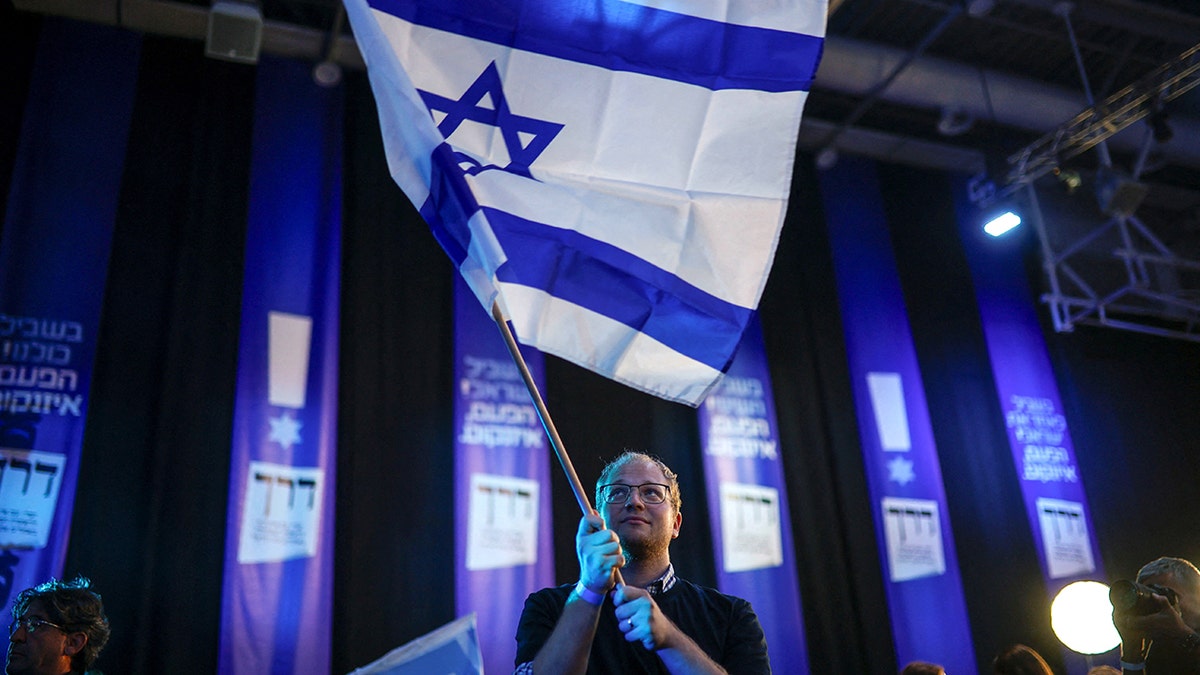
A supporter of former military chief Gadi Eisenkot, leader of the Yashar party, reacts to the exit poll at his party headquarters, on the evening of Israel’s national election, in Tel Aviv, Israel Oct. 27, 2026. (Shir Torem/Reuters)
FORMER ISRAELI PM EMERGES AS WILD CARD IN HIGH-STAKES ELECTION WITH MIDDLE EAST’S FUTURE AT STAKE
Netanyahu fights for political future as Israel heads to polls with Iran threat looming
The results are preliminary projections, not an official vote count, and could change as ballots are tallied in the coming days.
The election followed an extraordinary day at polling stations across Israel, with long lines and voter participation reaching levels not seen in decades.
Israeli voter turnout surged to a historic high, with 77.7% of eligible voters casting their ballots by the time the polls closed, according to Israel’s Central Elections Committee. The figure marked the highest turnout recorded since 1999, underscoring the intensity of the country’s national election.
The unusually high participation prompted election officials to streamline voting procedures and assure voters that anyone arriving at a polling station before the 10 p.m. deadline would be allowed to cast a ballot.
The vote was widely seen as a referendum on Netanyahu’s leadership following three years of war and continuing questions about responsibility for the security failures that allowed Hamas terrorists to kill approximately 1,200 people and abduct 251 others on Oct. 7, 2023.
JD VANCE DECLINES TO ENDORSE NETANYAHU DESPITE TRUMP’S STRONG BACKING
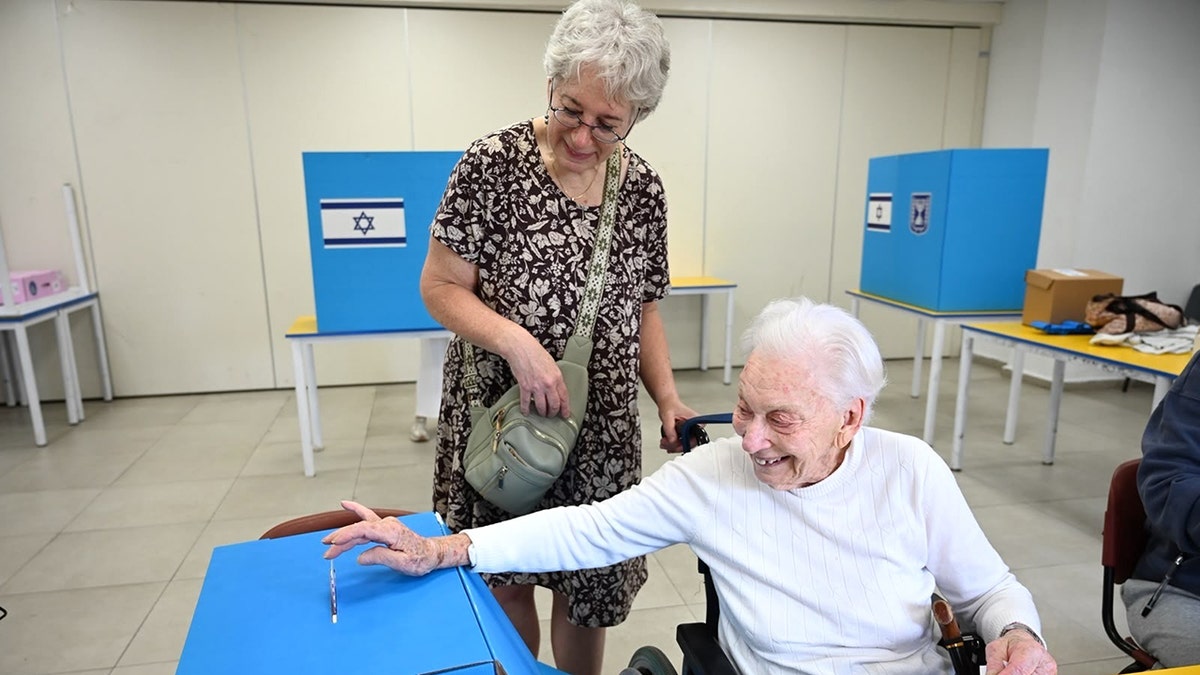
Residents of Jerusalem cast their votes on Oct. 27, 2026. (Yoav Dudkevitch/TPS-IL)
Netanyahu, Israel’s longest-serving prime minister, campaigned on his record of confronting Iran and its regional proxies, highlighting Israel’s military achievements and his relationship with President Donald Trump. His opponents accused him of failing to accept responsibility for the October 7 security failures and opposed his government’s approach to investigating the failures that preceded the massacre.
A last-minute battle for every vote
Throughout the final hours of the campaign, Netanyahu, Eisenkot, former Prime Minister Naftali Bennett and other party leaders mounted an intensive effort to mobilize supporters and win over undecided voters.
Netanyahu’s Likud party prepared hundreds of targeted campaign videos and social media messages, making digital outreach a central part of its last-minute election strategy.
Eisenkot’s campaign pushed supporters to rally behind Yashar as the leading alternative to Likud, while Bennett traveled between cities and engaged voters directly and through WhatsApp conversations.
The key question now is which candidate can secure the support of at least 61 lawmakers when President Isaac Herzog consults with the newly elected parliamentary factions. If Eisenkot can obtain those recommendations, including from Arab parties, he would have a strong claim to receive the first opportunity to form a government, even though Netanyahu’s Likud is projected to remain the largest individual party. Crucially, Arab parties could recommend Eisenkot without formally joining his governing coalition. However, the final decision rests with Herzog, who is tasked with selecting the lawmaker he believes has the best chance of forming a government. Securing the first mandate would not guarantee Eisenkot could assemble a governing majority, leaving the possibility of another political deadlock.
NETANYAHU FIGHTS FOR POLITICAL FUTURE AS ISRAEL HEADS TO POLLS WITH IRAN THREAT LOOMING
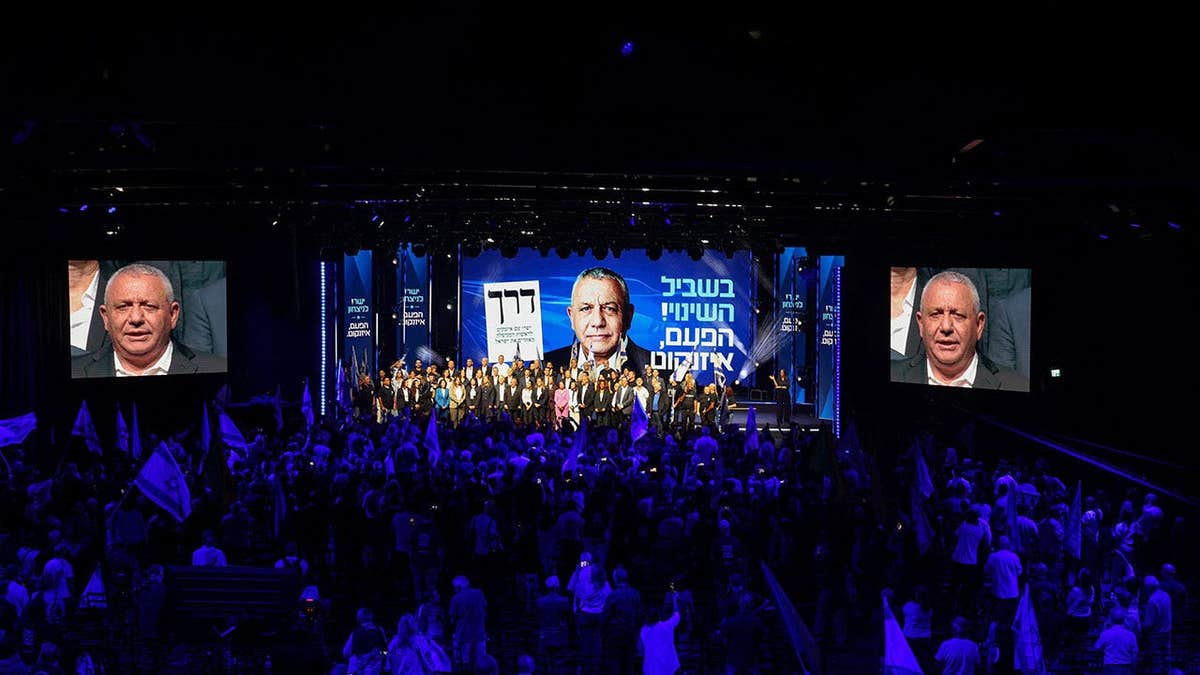
Former Israeli military chief Gadi Eisenkot attends an event for his Yashar party, ahead of Israel’s national election in Tel Aviv, Israel, October 25, 2026. (Ronen Zvulun/Reuters)
The campaign’s closing hours also featured personal appeals, phone calls to undecided voters and aggressive turnout operations across the political spectrum.
The final days were particularly important because a relatively small share of voters remained undecided about which party to support.
A Times of Israel poll published five days before the election found that 87% of respondents had already made their final choice, while 2.4% remained undecided between the pro and anti-Netanyahu political blocs.
Other surveys suggested a larger pool of undecided voters, although many were choosing between parties within the same political camp rather than switching sides.
That distinction could prove decisive in Israel’s parliamentary system, where political parties need at least 3.25% of valid votes to enter the 120-seat Knesset.
Even a slight change in the vote share of smaller parties could shift several parliamentary seats and determine whether either camp has a realistic path to power.
TRUMP SAYS NETANYAHU NEEDS TO BE RE-ELECTED, OR ELSE US WILL HAVE TO ‘FINISH THE JOB’ AGAINST IRAN ALONE
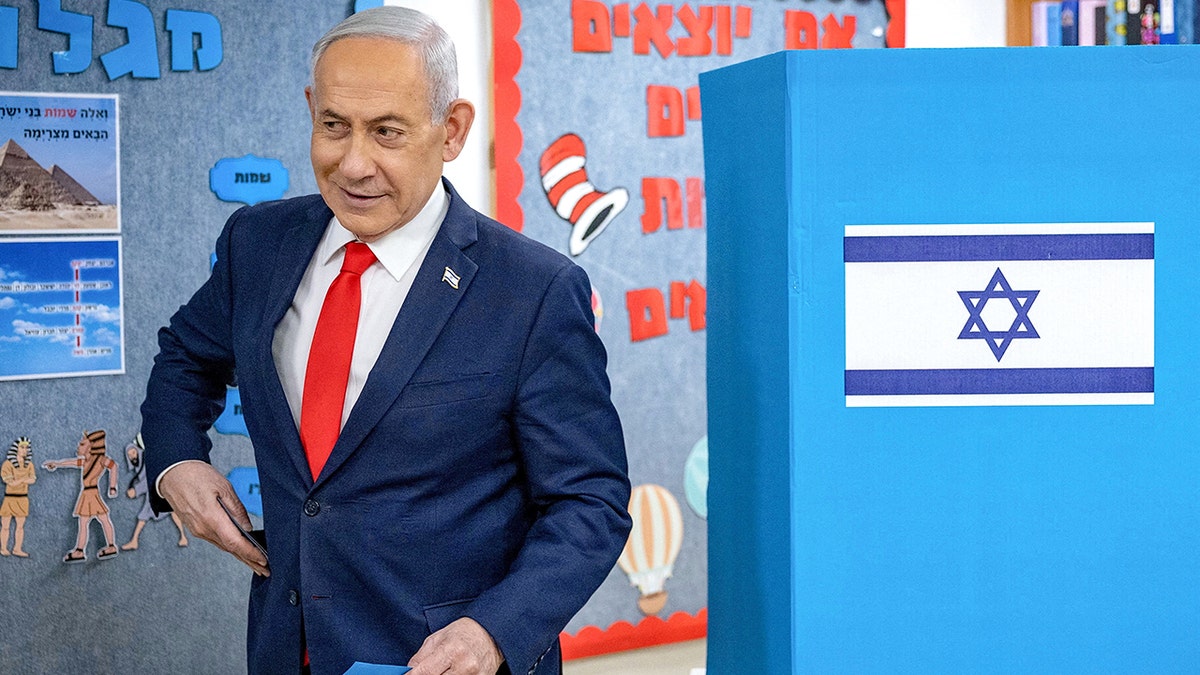
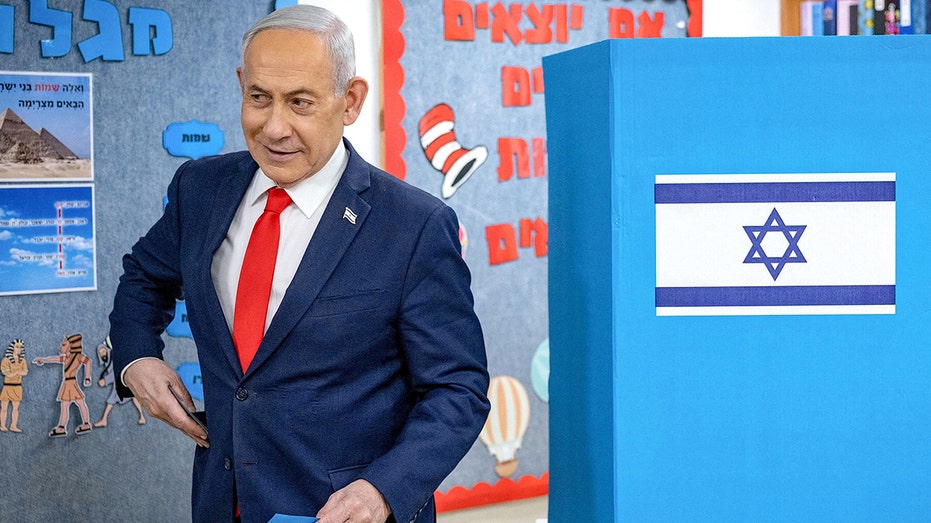
Israel’s Prime Minister Benjamin Netanyahu reacts after filling out his ballot before voting at a polling station in Jerusalem on Oct. 27, 2026, on the day of Israel’s legislative election. (Yonatan Sindel/Pool via Reuters)
What happens next?
Despite the exit poll projections, the identity of Israel’s next prime minister may remain uncertain for weeks.
Unlike in the United States, Israelis vote for political parties rather than directly electing their head of government.
The 120 seats in parliament are allocated proportionally, and parties must secure at least 3.25% of valid votes to win representation.
Once the final results are certified, Israeli President Isaac Herzog will consult with the newly elected political factions and select the lawmaker he believes has the strongest chance of forming a government.
A supporter of former military chief Gadi Eisenkot, leader of the Yashar party, reacts to the exit poll at his party headquarters, on the evening of Israel’s national election, in Tel Aviv, Israel Oct. 27, 2026. (Shir Torem/Reuters)
CLICK HERE TO DOWNLOAD THE FOX NEWS APP
That candidate will have 28 days to negotiate a governing coalition, with the possibility of a 14-day extension.
Official results are scheduled to be published by Nov. 4. Until a new government takes office, Netanyahu’s outgoing government will remain in power.
Efrat (Effie) Lachter is a reporter for Fox News Digital with more than 15 years of experience covering conflict, global affairs, human rights and political accountability. She has directed and produced more than 200 documentary segments across more than 40 countries, documenting conflicts, humanitarian crises, corruption, human trafficking, gender-based violence and the human stories behind major world events.
Lachter’s reporting has taken her into conflict zones and crisis areas across the Middle East, Europe, Asia and Africa. Her work has included uncovering human trafficking networks, revealing an ISIS underground torture prison in Syria, documenting the war in Ukraine and interviewing senior political figures and world leaders. She was also among the Western journalists who entered Russia after the war began to bring testimonies from Putin’s opposition. Lachter is the recipient of the 2022 Peres Center for Peace Award and was a 2023–2024 Knight-Wallace Journalism Fellow at the University of Michigan. She also won two Rockower Awards for Excellence in Reporting. She holds a bachelor’s degree in communication and a master’s degree in political science.