
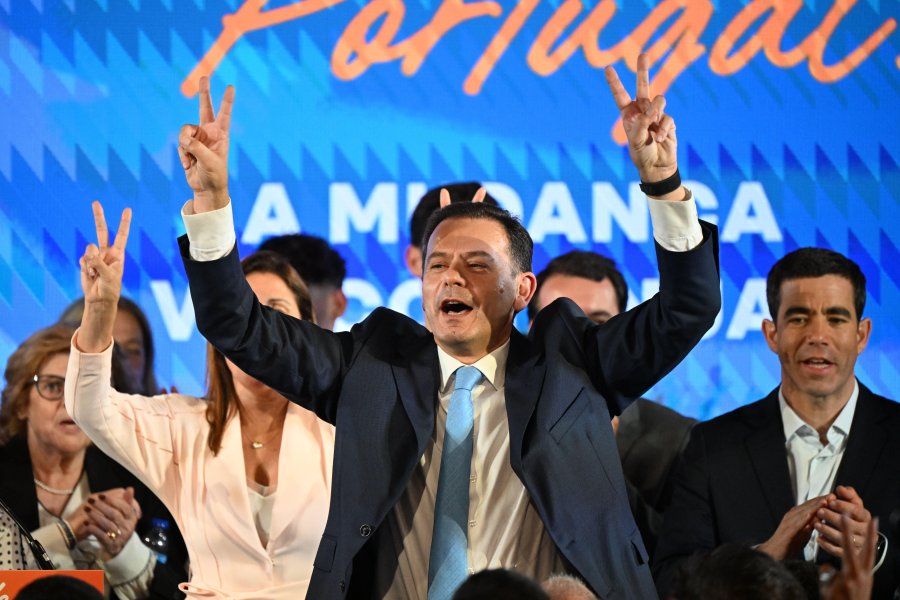

Prime Minister Luís Montenegro’s centre-right Aliança Democrática has won Sunday’s snap parliamentary election in Portugal. The right-wing populist Chega party, which was in a neck-and-neck race for second place with the Socialist Party that governed Portugal with an absolute majority just over a year ago, made significant gains. The Portuguese press takes stock.
Open/close all quotes
Chega capitalises on lack of stability
All the political parties are partly to blame for the right-wing populists making further gains, says Público:
“The parties were unable to offer citizens a minimum of political stability or prospects for the future. They have allowed despondency to spread, perceptions to become entrenched and pessimism to take hold. … Instead of seeking solutions, the parties – all the parties – became embroiled in bickering and brought down the government over the tarnished reputation of the prime minister. The only way to prevent a Chega victory in the near future lies precisely in the recipe that was not applied last year: negotiate openly and guarantee a government with a minimum of stability for as long as possible.”
Right-wing populists like a hurricane
For Sol, the election has two clear winners:
“Luís Montenegro and André Ventura. The prime minister, whose government was toppled in the wake of a scandal involving a family business, sees his legitimacy confirmed and reinforced. … What could have been a shock that threatened a precarious government turned a slim majority into a comfortable one. … But the real winner in these elections is undoubtedly André Ventura. Chega has swept through politics like a hurricane and turned the country upside down. Until these elections, a neck-and-neck race with the PS [Socialist Party] would have been unimaginable.”
New government must succeed
The new government must get down to business quickly, stresses Correio da Manhã:
“This is no time for illusions, because the challenges that lie ahead are huge. In addition to familiar problems such as chaotic healthcare services, housing shortages, a demographic winter [low birth rate] and economic difficulties, the global context has changed in 2025 and brought new threats. The tariff war is already slowing down the global economy. … In a poor country with so many social dramas and such a lack of hope, if the next government doesn’t succeed the population is at risk of falling into a populist maelstrom.”
Comments are closed.