
East Asia
Jin Liqun, who is stepping down as AIIB’s president in about two months, also said the bank must adapt to emerging technologies like artificial intelligence.
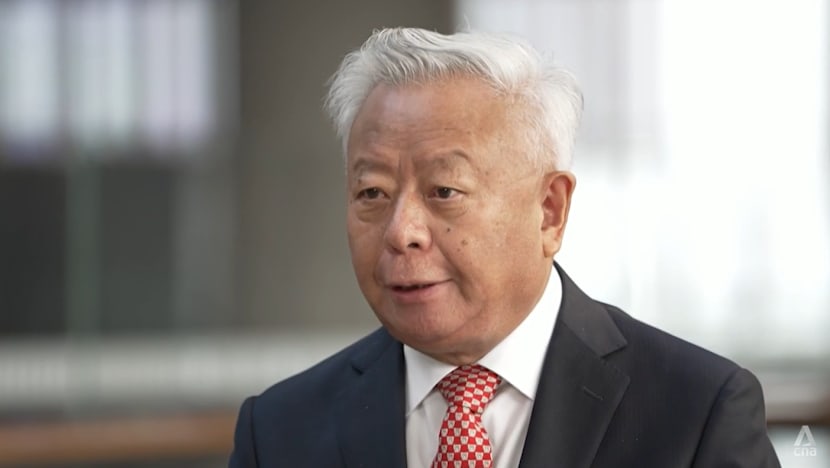
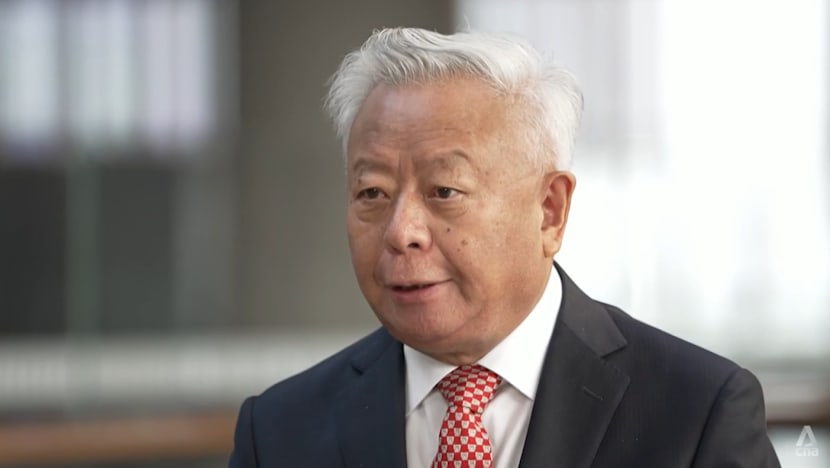
Asian Infrastructure Investment Bank’s founding president Jin Liqun speaks to CNA.
New: You can now listen to articles. 
This audio is generated by an AI tool.


24 Nov 2025 03:54PM (Updated: 24 Nov 2025 04:47PM)
BEIJING: Stronger cross-border cooperation and candid dialogue are critical as the world grapples with rising geopolitical tensions and economic uncertainty, said the Asian Infrastructure Investment Bank’s (AIIB) founding president.
“When you look at the positive results of international cooperation among the multilateral institutions, I think people would be convinced that if we are faced with some of the challenges, the only solution is (to) sit down and have a frank talk, and then we come up with some of the solutions,” Jin Liqun told CNA in a wide-ranging interview on Nov 12.
Jin, who is stepping down as head of the multilateral development bank on Jan 15, also said it must adapt to emerging technologies like artificial intelligence.
The AIIB was established by Chinese President Xi Jinping in 2016. Some observers see it as China’s alternative to the World Bank and other Western-led multilateral lending institutions.
The bank, which currently has 111 approved members worldwide, finances sustainable infrastructure projects.
BUILDING WORLDWIDE CREDIBILITY
Despite growing global fragmentation and trade frictions, Jin said the AIIB has maintained “very good business relations” with American and Japanese institutions.
The United States and Japan are not members of AIIB.
“We believe we work together to promote the common good,” Jin added.
“In the context of (the fractured) geopolitical situation, I think we have all the reason to push for concerted efforts to deal with climate change and, sometimes, the challenges faced by some other countries (such as) scarcity of resources.”
These issues can always be solved if there is commitment to do so, he noted.
Nevertheless, he acknowledged that winning global confidence had not been easy when AIIB was established.
Jin said a key challenge was convincing Canada and European nations that AIIB would adhere to the same high standards as established development banks while tackling issues such as climate change and job creation.
“It’s not that easy to convince people of your genuine commitment. It takes time to convince people by what you do, not by just what you say,” added Jin, who was China’s vice minister of finance from 1998 to 2003.
Beyond the bank’s financial achievements – with US$68 billion committed across more than 350 projects – its greatest success lies in establishing credibility and governance, he said.
“People have trust in this bank. I think that’s the most important part of success.”
Co-financing major infrastructure projects remains essential, Jin added, as no single institution can handle billion-dollar undertakings alone.
He noted that AIIB complements rather than competes with other multilateral institutions such as the World Bank and Asian Development Bank (ADB).
“When we all work together, suddenly, the development banks’ influence on policy (and) reform will be certainly greater,” he said.
LOOKING AHEAD
Looking ahead, Jin said exploring new areas of financing will be key for AIIB as it enters its second decade next year.
Asia faces an infrastructure financing gap that is expected to exceed US$26 trillion by 2030.
“We focus on Asia, but we go beyond Asia because we believe Asia cannot sustain itself without working with the rest of the world,” he added.
He highlighted climate change as a central challenge, calling for stronger cooperation to promote renewable energy and a green economy.
Jin said the bank must also adapt to emerging technologies.
“With AI advancement and IT, how should we help these countries to develop their digital infrastructure, thereby reducing the digital divide?” he questioned.
“AI is now all the rage. If any country does not invest in AI, in IT, they would be trailing way behind the other countries in the future. Our bank needs to do more in this regard.”
This would not simply involve increasing funding but taking “a balanced approach” that tailors support to each country’s capabilities, he added.
AIIB has already supported data centre projects in Malaysia and efforts to build a regional power grid across the Association of Southeast Asian Nations (ASEAN) – initiatives that Jin said reflect the bank’s drive to improve efficiency and resilience in traditional economies.
He urged greater attention to education and health as well, noting how the COVID-19 pandemic “took a big toll” on its members’ economies.
“Education is not simply the normal education we talk about. How can we provide education to the younger generation who can fit better into the AI era?” he added.
As he prepares to step down next year, Jin expressed confidence in AIIB’s future leadership.
The bank’s next president will be Zou Jiayi, also a former Chinese vice minister of finance who has experience at the World Bank and the ADB.
“I have nothing which would wake me up at night because when I step down … the bank would be in good hands,” said Jin.
Comments are closed.