
East Asia
After the NBA’s blockbuster return to Macau, China is going all in – calling for foreign investment, boosting homegrown basketball talent, and setting its sights on the 2028 Olympics.
New: You can now listen to articles. 
This audio is generated by an AI tool.
05 Dec 2025 02:53PM (Updated: 05 Dec 2025 02:59PM)
BEIJING: China has announced ambitious goals to further promote and develop basketball in the country following the NBA’s recent successful return – which include prioritising talent, encouraging high‑quality foreign investment and also setting targets for its national teams to qualify for the 2028 Olympics.
In a statement released on Thursday (Dec 4), the General Administration of Sport of China (GASC) unveiled a series of guidelines and measures for provinces, municipalities and relevant associations, institutions and enterprises.
Efforts will focus on “improving youth, grassroots, and professional basketball” while “encouraging open competition” and “promoting comprehensive development and pilot reforms”, GASC said, also calling for high-quality foreign investment and overseas leagues and training institutions to establish operations in China.
It also set ambitious targets for Chinese national basketball teams. The men’s team should ensure it qualifies for the 2028 Olympics Games and “features consistently” by 2035, GASC said.
The national women’s team should reach “world-class status” and national squads should “advance to international levels”, it added.
Long-term efforts will also focus on strengthening the youth basketball scene, the agency said.
The number of Chinese youths playing basketball should also be “significantly improved and increased” by 2030, GASC said, adding that Chinese basketball’s global influence should also be greatly enhanced.
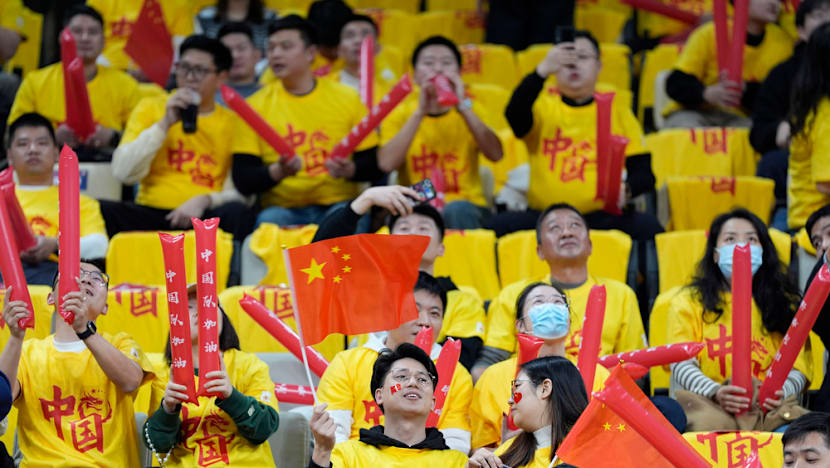
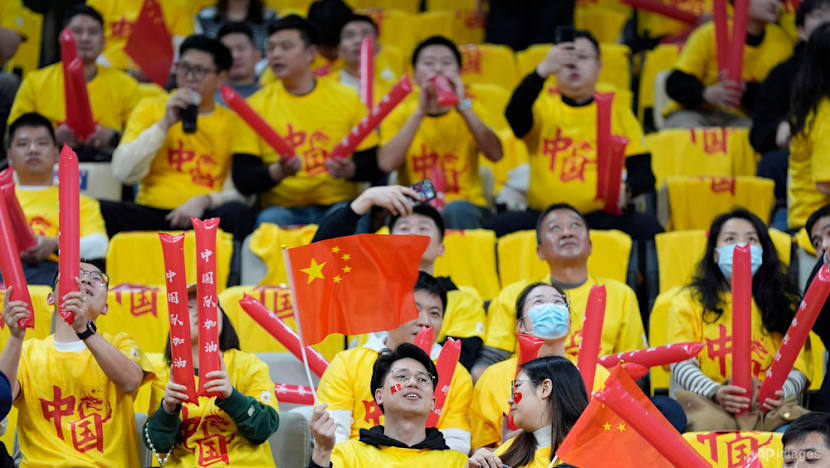
Despite official efforts to promote and nurture local football teams and talent, basketball remains immensely popular in China.
The NBA is also hugely popular especially among Chinese youths even despite previous political setbacks.
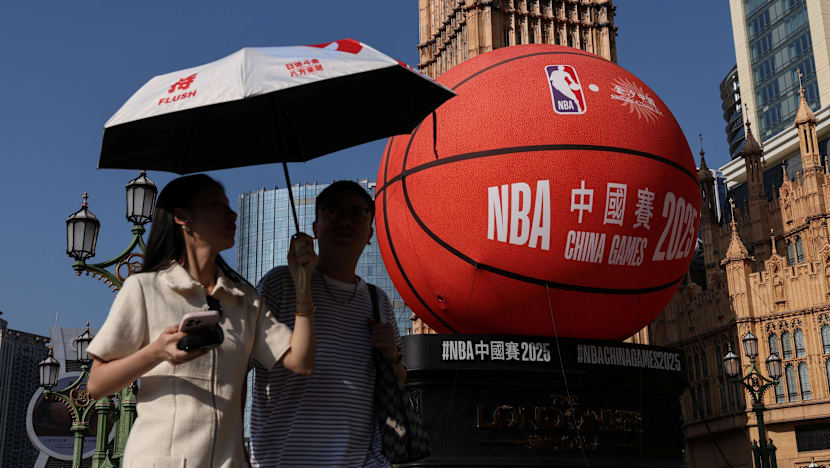
In October, it returned to China after a six-year hiatus – staging two sold-out pre-season matches in Macau between the Brooklyn Nets (owned by Alibaba chairman Joseph Tsai) and the Phoenix Suns.
“The game of basketball touches everywhere in the world, but especially in China,” Phoenix Suns’ star player Devin Booker previously told reporters in Macau.
“It’s super important (as) we have a big fan base out here in China, and we have Chinese players in the NBA,” Booker said.
Two matches per year are expected to be held in Macau over the next four years, NBA commissioner Adam Silver said back in October – which “could take place in other parts of China, concurrent with our Macau arrangement”.
A meeting hosted by GASC director Gao Zhidan, was held in Shenyang city this week, according to Chinese media reports.
It was attended by “all organisations and individuals who work for Chinese basketball in the country”, including officials from seven Chinese Basketball Association (CBA) teams and the professional minor National Basketball League (NBL), sources told the South China Morning Post.
But there have already been setbacks.
South Korea scored back-to-back victories over China this week at qualifying matches for the International Basketball Federation (FIBA) Asia Cup.
“The Chinese men’s national basketball team suffered a 76-90 defeat to South Korea, marking their second consecutive loss,” read a report on Sohu.com, a Chinese online media site.
A previous Nov 28 match between both sides in Beijing saw China losing 80-76.
Addressing the media in a post-match conference, Chinese head coach Guo Shiqiang addressed the seriousness of the situation.
“At the moment, the Chinese team is in a very passive position,” Guo said in comments carried by the state-run Global Times newspaper.
“Losing to South Korea in back-to-back games, our first and second matches of this qualifying window, has indeed made it much harder for us to reach the World Cup finals,” he added.
Player Hu Jinqiu described the losses as “a brutal reality”.
“Losing two straight games leaves us with a lot to reflect on,” Hu told reporters.
“But I will always believe in our entire group and our entire team. This is not our true level, we’ve lost the internal fighting spirit and mentality we used to have.”