
Asia
Aceh governor Muzakir Manaf said response teams were still searching for bodies in “waist-deep” mud.
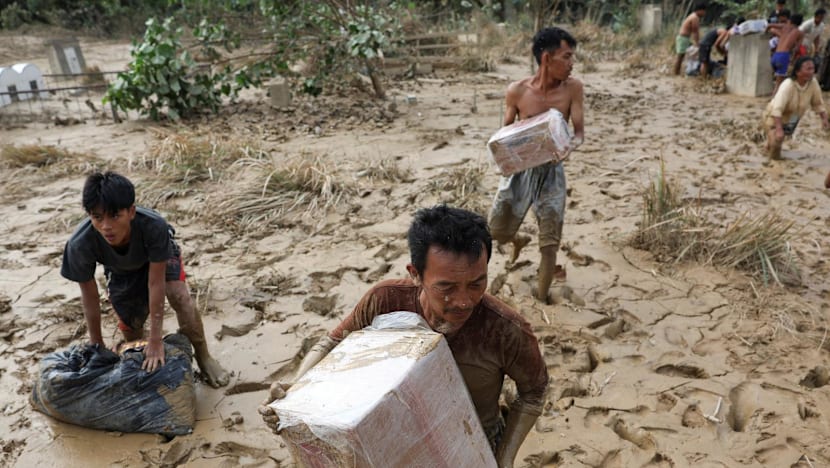
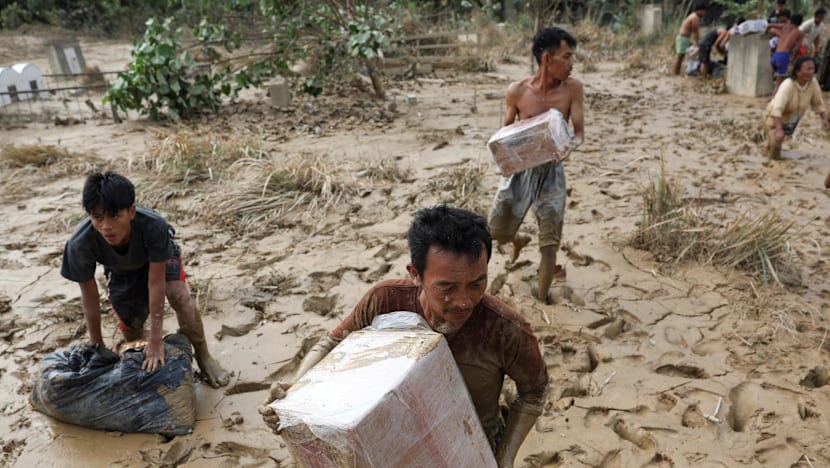
Survivors collect relief supplies in an area affected by a deadly flash flood following heavy rains in Karang Baru, Aceh Tamiang regency, Aceh province, Indonesia, Dec 6, 2025. (Photo: REUTERS/Ajeng Dinar Ulfiana)
06 Dec 2025 01:39PM (Updated: 06 Dec 2025 07:35PM)
ACEH TAMIANG, Indonesia: Residents in the Indonesian region of Aceh Tamiang climbed over slippery logs and walked for about an hour on Saturday (Dec 6) to get aid, as the death toll from floods and landslides that hit Sumatra island this month rose to more than 900 people.
The death toll from the cyclone-induced floods and landslides across three Indonesian provinces on Sumatra, including Aceh, rose to 908 people on Saturday, with 410 listed as missing, government data showed.
The storm systems also killed about 200 people in southern Thailand and Malaysia.
Indonesia’s national weather agency said rain could return on Saturday to the provinces of Aceh and North Sumatra, where floods have swept away roads, smothered houses in silt and cut off supplies.
Aceh governor Muzakir Manaf said response teams were still searching for bodies in “waist-deep” mud.
However, starvation was one of the gravest threats now hanging over remote and inaccessible villages.
“Many people need basic necessities. Many areas remain untouched in the remote areas of Aceh,” he told reporters. “People are not dying from the flood, but from starvation. That’s how it is.”
Entire villages had been washed away in the rainforest-cloaked Aceh Tamiang region, Muzakir said.
“The Aceh Tamiang region is completely destroyed, from the top to the bottom, down to the roads and down to the sea,” he said. “Many villages and sub-districts are now just names.”
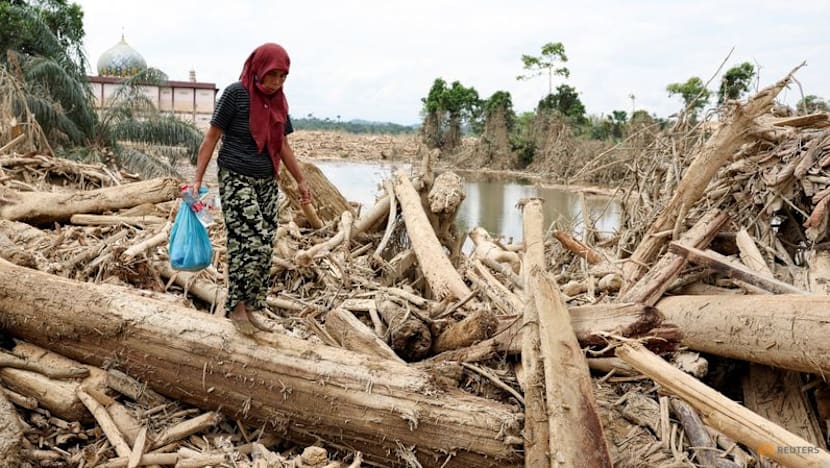
Survivors in the Aceh Tamiang region, on the northeast coast of Sumatra, walked for an hour on Saturday, scrambling over scattered logs and passing overturned cars to reach an aid distribution centre set up by volunteers, they told Reuters.
Volunteers handed out clean clothes and brought in a tanker truck of fresh water so people could fill plastic bottles, Reuters witnesses said.
Dimas Firmansyah, a 14-year-old at an Islamic boarding school, said access in and out of Aceh Tamiang was cut, and that students had stayed at the school for a week, taking turns to search for food and boiling and drinking floodwater.
“We stayed for about a week there,” Dimas said, urging the government to come to the area to see the calamity themselves.
Aceh resident Munawar Liza Zainal said he felt “betrayed” by the Indonesian government, which has so far shrugged off pressure to declare a national disaster.
“This is an extraordinary disaster that must be faced with extraordinary measures,” he told AFP, echoing frustrations voiced by other flood victims.
“If national disaster status is only declared later, what’s the point?”
Declaring a national disaster would free up resources and help government agencies coordinate their response.
Analysts have suggested Indonesia could be reluctant to declare a disaster – and seek additional foreign aid – because it would show it was not up to the task.
Indonesia’s government this week insisted it could handle the fallout.
CLIMATE CALAMITY
The scale of devastation has only just become clear in other parts of Sumatra as engorged rivers shrink and floodwaters recede.
AFP photos showed muddy villagers salvaging silt-encrusted furniture from flooded houses in Aek Ngadol, North Sumatra.
Humanitarian groups fear that the scale of calamity could be without precedent, even for a nation prone to natural disasters.
Seasonal monsoon rains are a feature of life in Southeast Asia, flooding rice fields and nourishing the growth of other key crops.
However, climate change is making the phenomenon more erratic, unpredictable and deadly throughout the region.
Environmentalists and Indonesia’s government have also suggested lthat ogging and deforestation exacerbated landslides and flooding in Sumatra.