
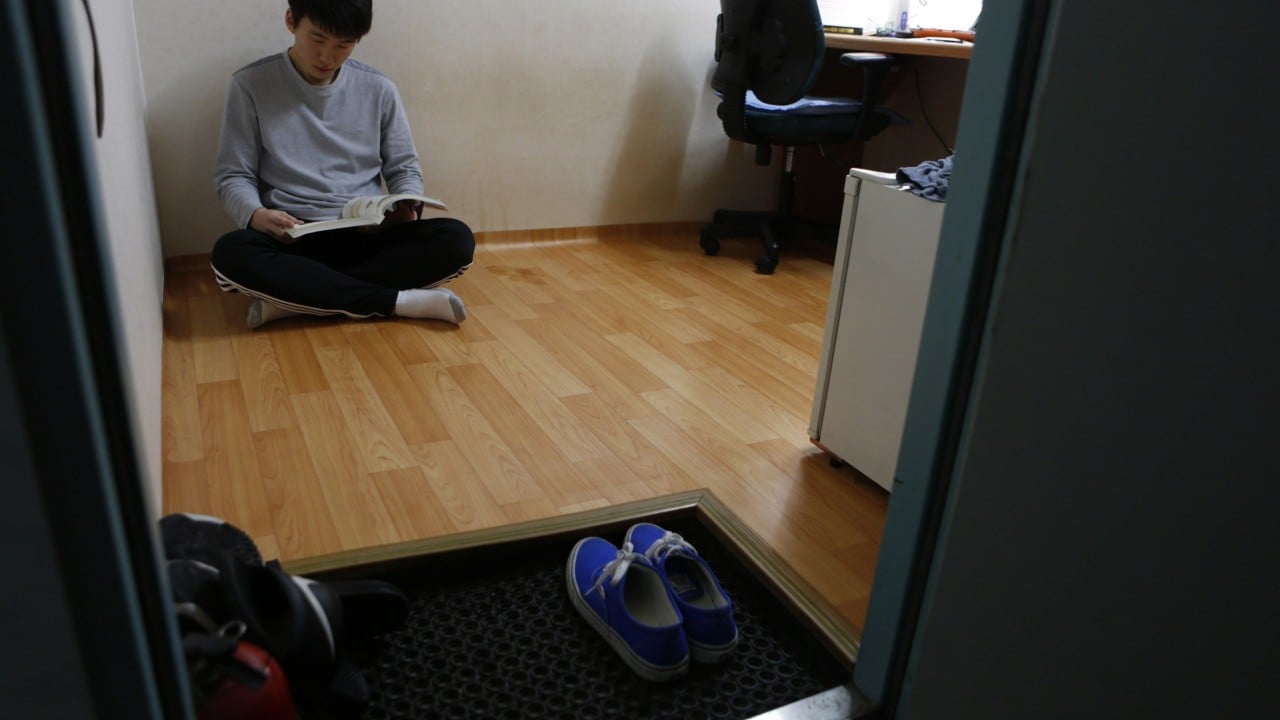
Kim, a 31-year-old office worker in Seoul, said she recently moved into a goshiwon near her workplace because she could not keep up with rising studio flat rents.
Goshiwon are dormitory-style accommodation often used by students or low-wage workers who need minimal living space at low cost. They often have shared kitchen and bathroom facilities, rooms are small, and some lack basic amenities such as windows.
Kim lived in a goshiwon when she first moved to the South Korean capital from her hometown of Gumi, North Gyeongsang province, in 2017, but later moved to an officetel, a kind of studio or one-room flat.
“I know that goshiwon are far less convenient than officetel, but I really could not keep up with the growing monthly rent for such accommodation,” Kim said.
“Going back to a goshiwon was the only option I had,” she added.
Kim represents a growing number of young South Korean adults increasingly pushed into substandard housing in the Seoul metropolitan area, according to data jointly compiled by the Ministry of Land, Infrastructure and Transport and the ministry-funded Korea Research Institute for Human Settlements (KRIHS).
Data showed that in 2024, 5.3 per cent of households headed by people aged 19 to 34 lived in accommodation not legally classified as housing, such as goshiwons, shipping container housing and other unregulated buildings. That was more than double the 2.2 per cent recorded among households overall.