
analysis Asia
DBS’ anticipated acquisition of a stake in Alliance Bank would bring to a close its nearly two-decade effort to secure a meaningful foothold in Malaysia.
New: You can now listen to articles. 
This audio is generated by an AI tool.

09 Dec 2025 12:51PM (Updated: 09 Dec 2025 01:33PM)
KUALA LUMPUR: A rethink on competition in Malaysia’s tightly controlled banking sector by the Anwar Ibrahim administration has paved the way for Singapore’s DBS Bank to begin talks to acquire a stake in Alliance Bank, banking and government sources told CNA.
The Malaysian government is prepared to allow DBS to negotiate the purchase of an entire 29.06 per cent stake held by privately owned Vertical Theme, Alliance Bank’s largest shareholder, the sources said.
This came after regulators rejected an earlier bid by DBS, Southeast Asia’s largest lender, for a controlling interest in Alliance Bank.
DBS’ anticipated acquisition would bring to a close its nearly two-decade effort to secure a meaningful foothold in Malaysia.
Apart from regulatory resistance, DBS’ earlier attempts faced opposition from state-controlled Malaysian banks — particularly Maybank and CIMB — which were wary of increased foreign competition, bankers said.
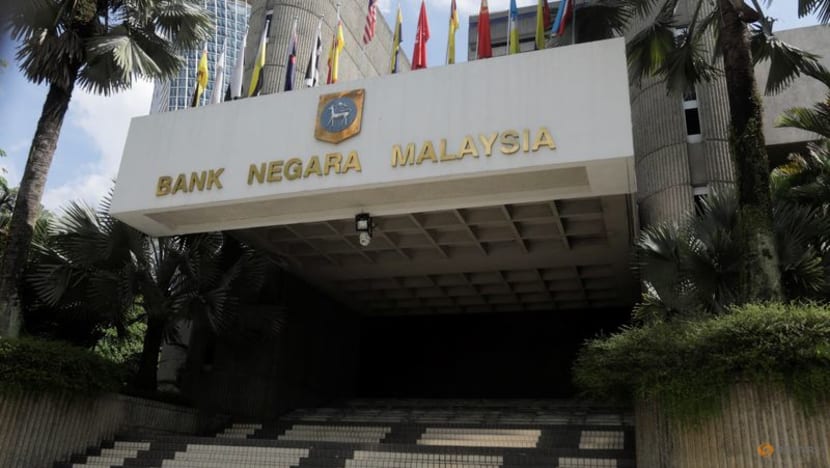
Bank Negara Malaysia (BNM), the country’s central bank, wields significant influence over the financial sector.
Banks must secure BNM’s consent and approval from the finance minister – Prime Minister Anwar concurrently holds the finance portfolio – before any party can even begin discussions on potential mergers or acquisitions involving financial institutions.
Financial executives close to the matter said that DBS can only begin negotiations on pricing after receiving the central bank’s go-ahead.
Based on Alliance Bank’s share price of RM4.69 (US$1.14) a piece when trading closed on Monday (Dec 8), Vertical Theme’s stake is worth roughly RM2.36 billion.
Banking executives said DBS had initially sought to acquire Vertical Theme’s shares and subsequently raise its total interest to as much as 49 per cent through further purchases on Bursa Malaysia.
A 49 per cent stake would have effectively given DBS management control and allowed it to consolidate Alliance Bank’s earnings.
However, BNM did not approve that plan, prompting DBS to revise its ambitions and pursue only the Vertical Theme stake, the executives said.
RARE EXEMPTION AND RETHINK
The anticipated approval for DBS to acquire Vertical Theme’s stake would mark a rare exemption from Malaysia’s strict banking ownership rules.
Under the Financial Services Act (FSA) 2013 — which replaced the Banking and Financial Institutions Act (BAFIA) — individual and institutional shareholdings in local banks are generally capped at 10 per cent and 20 per cent, respectively.
Exceptions may be granted with the finance minister’s approval based on BNM’s recommendation. (Under BAFIA, foreign ownership was capped at 30 per cent.)
A recent precedent came in September last year, when the government allowed the Sarawak state administration to acquire a 31 per cent stake in Affin Bank, previously controlled by the Armed Forces Pension Fund.
DBS declined to comment.
BNM also declined to comment, saying: “As a matter of policy, BNM does not comment publicly on specific applications on the acquisition or disposal of interest in shares of our regulated entities.”
Malaysia currently has 27 commercial banks: Eight majority Malaysian-owned and 19 foreign-owned.
Government officials and bankers said the rethink over DBS’s entry began several months ago when representatives from the small and medium enterprise (SME) sector — a backbone of Malaysia’s export-driven economy — complained that local banks were reluctant to lend to SMEs, preferring large corporate clients and foreign companies.
Sources said Anwar took notice and requested proposals on addressing the financing gap. This brought attention to Alliance Bank.
Although one of Malaysia’s smallest commercial banks, Alliance is widely regarded as among the strongest players in the SME segment.
The Malaysian lender has won numerous awards for supporting SMEs through digital innovation, earning titles such as Best SME Bank in Malaysia in 2024 from The Asian Banker, a regional industry publication.
But with an asset base of RM85.2 billion, its ability to expand support for SMEs is limited.
Business leaders who accompanied Anwar on an official trip to Africa last month said the premier raised the SME financing issue during informal discussions on the economy, and signalled interest in allowing the DBS–Alliance Bank deal to proceed.
A senior banker briefed on those conversations said the premier emphasised that the only way to solve SME financing constraints was to introduce more competition into the banking sector.
“The deal is also easier to push through because relations are much better,” said the banker, referring to warmer Malaysia–Singapore ties since Anwar took office in November 2022.
Unlike its Singapore peers OCBC and UOB, both of which have long operated in Malaysia, DBS has no direct commercial or retail banking presence in the country. It only operates an offshore banking office in Labuan, a Malaysian tax haven located in Borneo.
Regionally, however, DBS is a financial powerhouse, with assets of S$841.9 billion (US$662.5 billion) and operations in 19 markets. It is widely regarded as a leading SME lender.
Bankers in Kuala Lumpur said DBS’s planned acquisition of Vertical Theme’s stake is unlikely to immediately disrupt Malaysia’s tightly regulated banking sector.
“Alliance is small, and a strategic stake without management control won’t move the needle much for the sector,” said a director of a Malaysian state-controlled bank.
“In a regulated market like ours, size is key. Larger banks enjoy lower costs per revenue dollar and command higher valuations.”
DBS’ INDIRECT ROUTE
Still, some bankers believe DBS’s entry could benefit Alliance Bank, particularly given DBS’s regional strength in SME banking.
“There is room for small, nimble banks. The regional connections and digital capabilities — which are now essential — would be a boost for Alliance and could intensify competition,” said a former chief executive of a foreign bank in Malaysia.
He added that many domestic commercial banks, largely state-controlled through government-linked investment arms, tend to be territorial and wary of foreign competition.
“There has always been talk that local banks were concerned about giving a big player like DBS entry. That’s why approval has taken so long,” he said.
OCBC and UOB established their Malaysian presence during the colonial era and expanded through post-independence mergers.
DBS, incorporated in 1968, entered the scene later and faced a more protectionist policy environment shaped by Malaysia’s efforts to uplift the country’s politically dominant ethnic Malays.
With little prospect of securing a full banking licence, DBS pursued indirect routes for Malaysian exposure, banking executives said.
Alliance Bank was formerly called Multi-Purpose Bank.
During the government’s major banking consolidation drive in 2000 — aimed at strengthening institutions after the Asian Financial Crisis — Multi-Purpose Bank was selected as one of the anchor banks in the merger exercise.
By 2004, it had merged with seven financial institutions to form Alliance Bank. In that consolidation, privately owned Langkah Bahagia — controlled by former finance minister Daim Zainuddin — emerged as the largest shareholder.
In 2005, Langkah Bahagia partnered with Singapore state-owned Temasek Holdings under a vehicle called Vertical Theme, becoming the dominant shareholders in Alliance Bank with a 29.06 per cent stake.
This was aimed at setting the stage for DBS to eventually gain a foothold in Malaysia banking, sources told CNA.
Temasek — which currently owns nearly 29 per cent of DBS — holds a 49 per cent stake in Vertical Theme through Duxton Investment & Development Pte Ltd, with the other 51 per cent initially owned by Langkah Bahagia.
Financial executives close to Daim said he was supportive as early as 2012 of a plan for Vertical Theme to sell its Alliance stake and pave the way for DBS to become a major shareholder.
But sources said the proposed plan faced strong resistance from top executives at Maybank and CIMB, who lobbied BNM to block any arrangement that would introduce a major Singaporean competitor.
In April 2016, representatives of Daim sold Langkah Bahagia’s 51 per cent stake in Vertical Theme to three Malaysian businessmen, including Ong Beng Seng, who recently drew headlines over his role in a high-profile court case involving former Singapore minister S Iswaran.
Ong, a Malaysian citizen, could not be reached for comment. His partners — Richard Ong of RRJ Capital and Seow Lun Hoo of advisory firm Newfields — also declined official comment.
FRESH CONSOLIDATION AHEAD?
The DBS–Alliance Bank proposal may take up to six months to complete due to regulatory and shareholder approvals required, bankers said.
They added that DBS’s entry could trigger a fresh round of consolidation in Malaysia’s banking sector, with particular attention on the two remaining Chinese-controlled banks: Public Bank and Hong Leong Bank.
When the FSA was introduced in 2013, it capped individual holdings at 10 per cent and institutional holdings at 20 per cent. However, a “grandfather clause” allowed founding shareholders to maintain larger stakes for their lifetimes — but these could not be passed on to heirs.
In the case of Public Bank, the family of the late founder Teh Hong Piow announced in 2024 that it would gradually reduce its roughly 22 per cent stake to 10 per cent over five years. The Teh Estate has since begun paring down, with its stake now at 21.23 per cent.
Tycoon Quek Leng Chan, 82, who controls 64.4 per cent of Hong Leong Bank, has yet to publicly indicate how he will address succession issues.
With DBS entering the picture, merger and acquisition bankers say Hong Leong Bank could become a target for Maybank or CIMB. A merger with either would create a financial powerhouse capable of challenging DBS.
Maybank, CIMB and Hong Leong Bank currently have assets of US$216 billion (RM1.08 trillion), US$182.74 billion (RM754.7 billion), and US$74.74 billion (RM308.7 billion), respectively.
Public Bank, with assets of US$129.9 billion, could instead become a merger candidate for RHB Bank, a slightly smaller state-controlled lender with US$85.74 billion in assets.
Both Public Bank and RHB share a common shareholder in Malaysia’s Employees Provident Fund (EPF), and a merger between them would resolve long-standing shareholding concerns flagged by BNM.
BNM has long been uneasy about EPF’s dominant 37 per cent ownership of RHB and bankers close to the situation said that the central bank has been pressuring the pension fund to gradually reduce its holdings.
A merger could potentially be through a share swap, which is when one company acquires another by exchanging its own shares for the target company’s shares, using equity as currency instead of cash.
With Public Bank bigger than RHB, a merger could potentially result in a dilution in EPF’s deemed holdings in the merged entity.
BNM’s concerns stem from the potential risks to EPF’s investment should RHB suffer from hits due to banking-sector turmoil or swings in the bank’s financial performance, bankers said.
Following the orderly sell-down by the Teh Estate’s holdings in Public Bank, EPF has been slowly raising its own holdings in the bank to roughly 18 per cent currently.
“The dominant positions EFP has in both banks, makes a merger a natural fit and even with Alliance in the mix,” said one veteran stockbroking executive, who knew the late Teh well.
EPF, which at one time held almost 10 per cent of Alliance, has cut its stake to just under 5 per cent currently.