Bangladesh forms wage board as garment protests turn violent
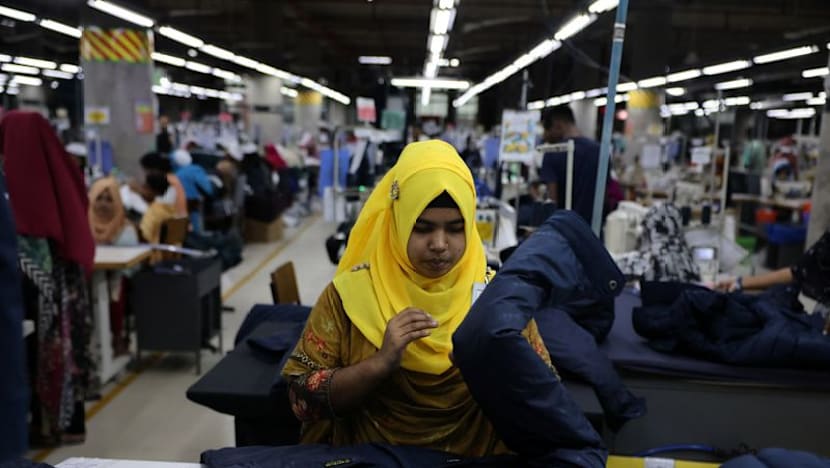
The wage board was formed after discussions with workers' representatives and industry leaders.
A worker inspects a jacket at the Yarn Dyeing Limited factory, amid the energy crisis, in Savar, on the outskirts of Dhaka on Sep 17, 2026. REUTERS/Mohammad Ponir Hossain
DHAKA: Bangladesh announced a six-member wage board on Sunday (Nov 1) to review garment workers' pay and urged employees to return to work, but protests demanding higher wages continued across major industrial areas, disrupting transport and factory operations.
Workers in the South Asian nation are demanding a minimum monthly wage of 30,000 taka (U$245), more than double the current 12,500 taka, saying rising costs of food, housing, transport and healthcare have sharply eroded their purchasing power.
The dispute has raised concerns about disruption to an industry that employs about 4 million workers, generates more than 80 per cent of Bangladesh's export earnings and supplies clothing to many leading Western brands.
Labour and Employment Minister Ariful Haque Chowdhury said the wage board was formed after discussions with workers' representatives and industry leaders and urged workers to resume work.
Guess Word Crack the word, one row at a time

Buzzword Create words using the given letters

Mini Sudoku Tiny puzzle, mighty brain teaser

Mini Crossword Small grid, big challenge

Word Search Spot as many words as you can

Despite the announcement, thousands of garment workers staged fresh demonstrations on Sunday.
Police used tear gas and water cannon to disperse workers who had blocked a busy intersection in Dhaka, police said. Some protesters hurled bricks at officers during the clashes.
Hundreds of workers also blocked a major highway in Gazipur, on the outskirts of the capital, disrupting transport in one of the country's key industrial belts.
The demonstrations forced owners to shut 25 to 30 factories, while authorities deployed Border Guard Bangladesh personnel to maintain order, Gazipur Industrial Police Superintendent Mohammad Amjad Hossain said.
The latest unrest follows demonstrations in Ashulia, a major garment manufacturing hub on the outskirts of Dhaka, where dozens of factories suspended operations on Saturday after workers staged protests demanding higher pay.
Chowdhury warned that prolonged disruptions could delay export shipments and payments from international buyers, creating further difficulties for manufacturers and workers alike.
Bangladesh's ready-made garment industry, the world's largest after China, contributes about 10 per cent of gross domestic product and is the backbone of the economy.
Manufacturers, however, said the sector is facing mounting challenges, including rising production costs, periodic gas and electricity shortages, and uncertainty in energy markets linked to tensions in the Middle East.
Source: Read original story
Comments ()