Bangladesh garment factories reopen as wage protests keep industry on edge
The workers’ demands reflect mounting pressure from rising living costs and persistent inflation.
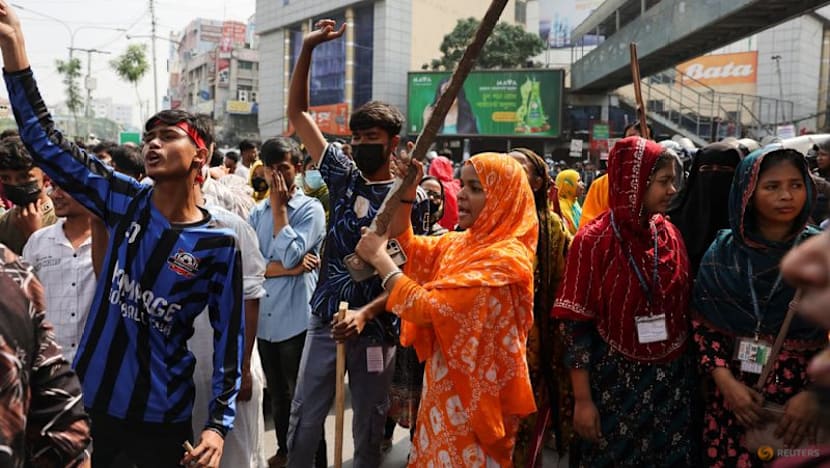
Garment workers shout slogans as they block a road during a protest demanding higher wages in Dhaka, Bangladesh on Nov 1, 2026. (Photo: Reuters/Jannatul Ferdaus)
DHAKA: Bangladesh's garment factories reopened on Monday (Nov 2) after widespread closures and production disruptions a day earlier, but manufacturers remain concerned about further unrest over workers' demands for higher wages.
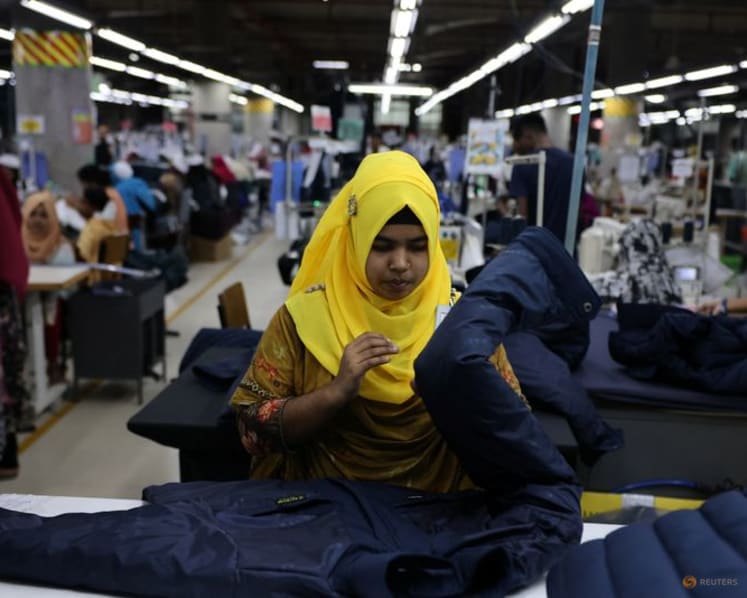
The ready-made garment sector accounts for more than 80 per cent of Bangladesh's export earnings, employs about four million workers and contributes around 10 per cent to the gross domestic product (GDP).
The latest unrest disrupted operations in key manufacturing hubs and raised concerns over export shipments and buyer confidence in Bangladesh, the world's second-largest apparel exporter after China, as workers demanded a minimum monthly wage of 30,000 taka (US$240), up from 12,500 taka.
The demand reflects mounting pressure from rising living costs and persistent inflation. The government formed a six-member minimum wage board on Sunday to review the demand but the move failed to immediately quell unrest.
Guess Word Crack the word, one row at a time

Buzzword Create words using the given letters

Mini Sudoku Tiny puzzle, mighty brain teaser

Mini Crossword Small grid, big challenge

Word Search Spot as many words as you can

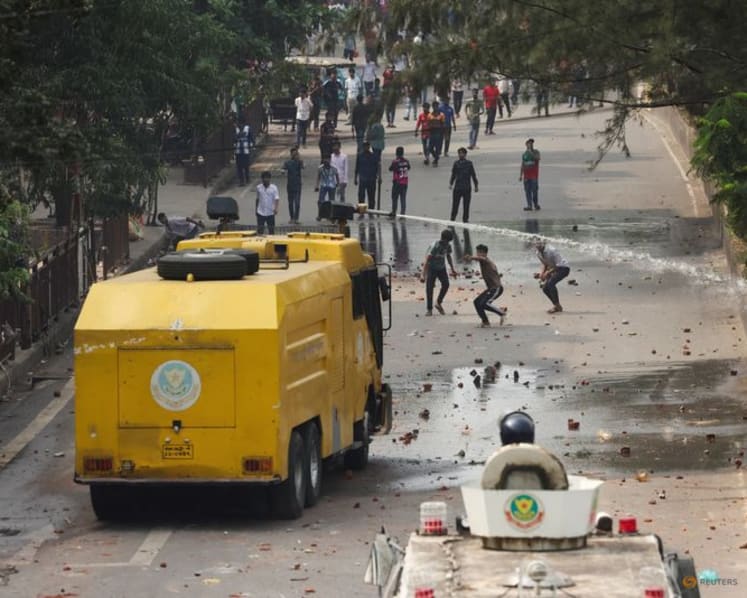
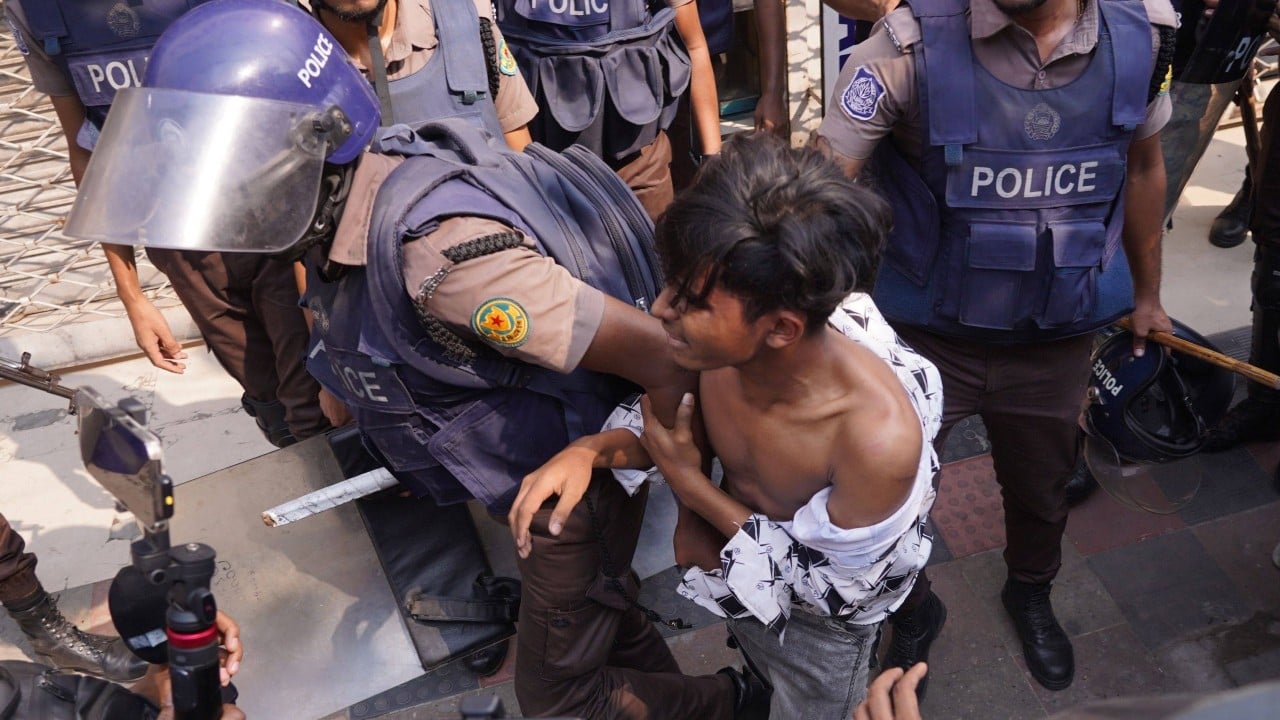
Workers set up road blockades in several industrial areas on Sunday, with police in the capital Dhaka using tear gas and water cannon to disperse protesters.
"Bangladesh has among the lowest garment wages in the world," said Babul Akhter, general secretary of the Bangladesh Garment and Industrial Workers Federation and a workers' representative on the wage board.
"If factory owners cannot pay workers properly, they should negotiate better prices with international buyers. They cannot build a business on the backs of underpaid workers."
“NO WORK, NO PAY PROVISION”
Factory owners said the industry faces higher costs, energy market uncertainty linked to conflict in the Middle East and slowing demand in key export markets.
The Bangladesh Garment Manufacturers and Exporters Association (BGMEA) said demonstrations in multiple cities disrupted operations at 529 factories and affected nearly one million workers.
"The government has already taken a step by forming the wage board. We expect workers to allow the review process to proceed," said BGMEA President Mahmud Hasan Khan.
"If protests break out later in the day and we are forced to shut factories, we will have no option but to invoke the 'no work, no pay' provision," he said, adding industry representatives were scheduled to meet the home minister to discuss the unrest.
Selim Raihan, an economics professor at the University of Dhaka, said workers' demands were understandable given high inflation and suppressed wages could cause further unrest.
However, he cautioned that a substantial wage increase could raise production costs, squeeze exporters' profit margins and weaken Bangladesh's price competitiveness.
"A phased wage adjustment, improved productivity and fairer pricing from international buyers are essential to balancing workers’ welfare with industrial sustainability."
Related:
Source: Read original story
Comments ()