Can Beijing's latest measures stop China's stock market slide?
analysis East Asia
Beijing’s measures may steady stocks for now, but analysts say a lasting recovery needs stronger growth and investor confidence.
This audio is generated by an AI tool.
SINGAPORE: In a bid to help stabilise the country’s struggling stock market, Chinese authorities rolled out fresh measures this week to boost liquidity, cut rates for share buy-back loans and ease curbs on leveraged trading.
It comes after the benchmark CSI300 Index plunged 8.5 per cent in October, its worst monthly performance since early 2016.
Sharp falls in tech stocks have also added to investor jitters over the world’s second-largest economy, which has been grappling with sluggish consumption and a prolonged property sector debt crisis.
Beijing is now making it easier and cheaper for financial institutions and companies to buy shares in an effort to stem the market's slide, analysts told CNA.
Guess Word Crack the word, one row at a time

Buzzword Create words using the given letters

Mini Sudoku Tiny puzzle, mighty brain teaser

Mini Crossword Small grid, big challenge

Word Search Spot as many words as you can

But the latest intervention appears aimed more at preventing further losses than sparking a sustained rally, they said - noting that a lasting recovery would require stronger economic growth, improved corporate earnings and a revival in investor confidence.
So what has prompted Beijing to step in, how will the new measures work - and can they stop the sell-off?
WHAT MEASURES HAS CHINA INTRODUCED?
The measures aimed at making more money available for stock purchases and encouraging companies to buy back their own shares.
First, the People’s Bank of China (PBOC) is making it easier for major financial institutions to raise funds to invest in stocks.
Under a mechanism known as a swap facility, securities firms, fund managers and insurance companies can exchange assets they already hold, such as government and corporate bonds, for more liquid assets from the central bank.
These can then be used to obtain funding to buy stocks, without the institutions having to sell their existing investments.
The PBOC said it would conduct a fresh round of swap operations on Tuesday (Nov 3) - potentially channelling more than 100 billion yuan (US$15 billion) into the stock market.
Related:
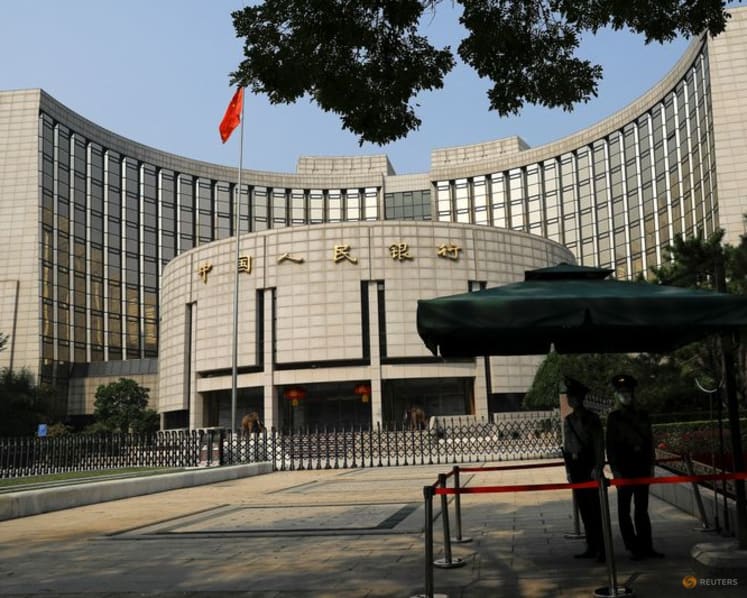
Thirty-one securities and fund companies have applied for swaps worth more than 100 billion yuan, the central bank said.
Gary Ng, senior economist at investment banking firm Natixis, said the facility would make it easier for large financial institutions to access funding, encouraging them to invest in shares.
The latest move also sends a strong signal of Beijing's determination to stabilise its stock market and shore up investor confidence, Hao Zhou, a Hong Kong-based analyst at Guotai Haitong Securities, told Reuters.
However, he cautioned that global market volatility and external uncertainties continued to weigh heavily on investor sentiment.
Related:


Beijing is also making it cheaper for listed companies to buy back their own shares.
The PBOC has cut the interest rate on a special lending facility for share buybacks and stake increases from 1.25 per cent to 1 per cent.
The scheme, introduced in 2024, will also become a permanent arrangement rather than a temporary measure.
Under the programme, banks can obtain cheaper funding from the central bank and lend it to listed companies to repurchase their shares.
Such buybacks can help support share prices by reducing the number of shares available in the market, observers said.
But Ng cautioned that buybacks do not guarantee higher share prices. Companies could end up taking on more debt to finance the purchases, even as their stock prices continue to fall.

Regulators are also encouraging major companies and investment funds to buy more stocks.
The China Securities Regulatory Commission (CSRC) has urged major companies in key stock indices, as well as leading tech firms, to repurchase shares to help stabilise their market value, Reuters reported.
It is also encouraging newly established exchange-traded funds (ETFs) to speed up stock purchases, while urging fund managers to invest during market downturns.
ETFs are investment funds that typically track a basket of stocks, allowing investors to invest in multiple companies through a single fund.
Together, the measures are intended to increase demand for shares and cushion the market against further sharp declines.
WHY IS BEIJING INTERVENING - AND WILL MEASURES WORK?
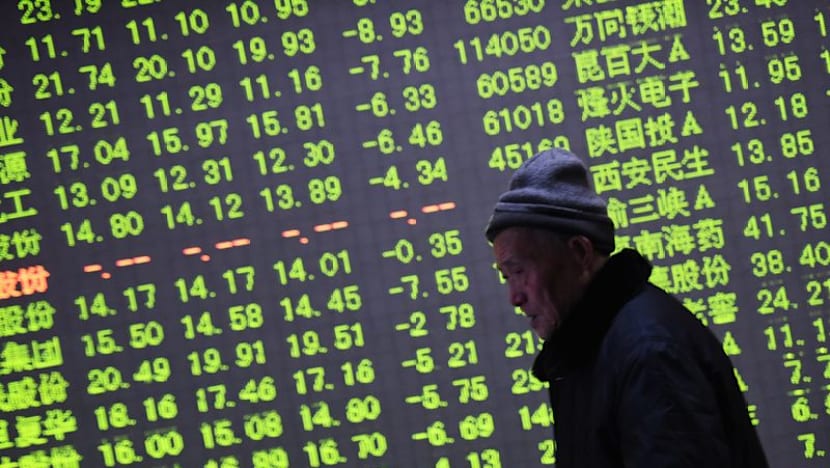
Chinese stocks have been under pressure for months, with the sell-off intensifying in October as tech and artificial intelligence-related shares suffered sharp declines.
But the downturn goes beyond technology stocks.
Ng from Natixis said that the broader decline reflects weak investor sentiment and persistent problems in China’s economy.
Sluggish domestic consumption, a prolonged property downturn and persistently low inflation have heavily weighed on corporate earnings and investor confidence.
Weak demand and low inflation would make it harder for companies to raise prices and increase profits, Ng said - particularly when competition is intense.

China's consumer inflation stood at just 0.9 per cent in September, according to official data released in October.
With corporate earnings under pressure, investors may be less inclined to buy Chinese shares, particularly when they see opportunities for better returns elsewhere.
Beijing's latest intervention also reflects growing concerns about financial stability.
Ng noted that state-backed funds had already stepped in to support the market around a major Communist Party meeting held in October.
According to a Bloomberg report on Oct 16, regulators urged state-backed investment funds to accelerate stock purchases, while Bloomberg Intelligence estimated that such investors bought about US$15 billion worth of shares through exchange-traded funds between Oct 9 and Oct 20.
“It's all about stability,” said Ng, adding that authorities appeared concerned that a prolonged market slide could pose wider risks to the financial system.
The latest measures could help put a floor under share prices, but some analysts cautioned that they may not be enough to drive a lasting recovery.
CNA Correspondent explores China’s big push for a tech-fuelled market boom, tracing key developments since early 2024 and examining why this time, the rally might be different.
Kenneth Goh, director of private wealth management at financial services firm UOB Kay Hian, said Beijing’s immediate priority was to stop the market from falling further, rather than spark a major rally.
The measures are designed “more to steady market sentiment”, he said - by making it easier for financial institutions and companies to obtain funding to buy shares.
Ng from Natixis added that making the share buyback lending facility permanent could also help reassure investors.
Unlike a temporary scheme that may expire, a permanent arrangement gives banks and companies greater certainty that funding will remain available, potentially encouraging them to plan share purchases over a longer period.
But cheaper and more readily available funding does not guarantee that investors will buy more stocks.
Ng cautioned that financial institutions and companies would still need to weigh the risks of investing, particularly in volatile sectors such as technology and AI.
Ultimately, while Beijing's measures may help cushion further losses and restore some confidence in the short term, a sustained recovery would depend on stronger economic growth and an improvement in corporate earnings.
IS IT ENOUGH TO STOP THE SLIDE?
Analysts expect the measures to provide some relief in the short term - but cautioned that the rebound could be short-lived unless China’s broader economic outlook improves.
Chinese stocks rallied on Monday following the announcement of the support measures, offering an early sign that Beijing's intervention had helped steady investor sentiment.
The Shanghai Composite Index climbed 1.1 per cent, its biggest one-day percentage gain since Aug 27, according to Reuters. The Shenzhen Component Index rose 1.6 per cent, while Hong Kong's benchmark Hang Seng Index gained 0.4 per cent.
Related:

Associate Professor Qu Feng from Nanyang Technological University's (NTU) economics division said that the measures “should help stabilise market sentiment by signalling that policymakers are prepared to intervene to prevent a further stock market decline”.
However, he warned that the initial gains were unlikely to last without stronger economic growth, fresh investment into the stock market and an easing of concerns over a potential AI bubble.
Feng also pointed to the high valuations of AI-related stocks, which cannot be addressed simply by pumping more money into the market.
A sustained recovery “would require stronger corporate earnings and greater clarity about the future profitability of AI investments”, he said.
Related:


Ng from Natixis similarly pointed to China's persistently low inflation and sluggish corporate profit growth as major obstacles to a lasting rebound.
Goh at UOB Kay Hian said that a sustained recovery would depend on stronger domestic demand and improved corporate profitability.
If market conditions fail to improve, Beijing could introduce further support measures before the end of the year, Goh said.
These could include additional cuts to borrowing costs, expanded liquidity facilities or more incentives for institutional investors to buy shares.
Ng also raised the possibility of further stock purchases by state-backed funds through ETFs if the sell-off continues.
Related:
But China's previous attempts to shore up its stock market offer a cautionary tale.
Beijing introduced similar liquidity support measures in October 2024 and January 2025, with the central bank providing a combined 105 billion yuan through earlier swap operations, according to Reuters.
Ng said such interventions had helped stabilise share prices temporarily in the past, but their effects often faded when underlying economic conditions failed to improve.
Ultimately, the latest measures offer more immediate relief than a foundation for lasting growth, Qu said.
“Their effectiveness in supporting a longer-term market recovery will ultimately depend on whether they are accompanied by improvements in economic fundamentals and investor confidence,” he added.
Source: Read original story


Comments ()