
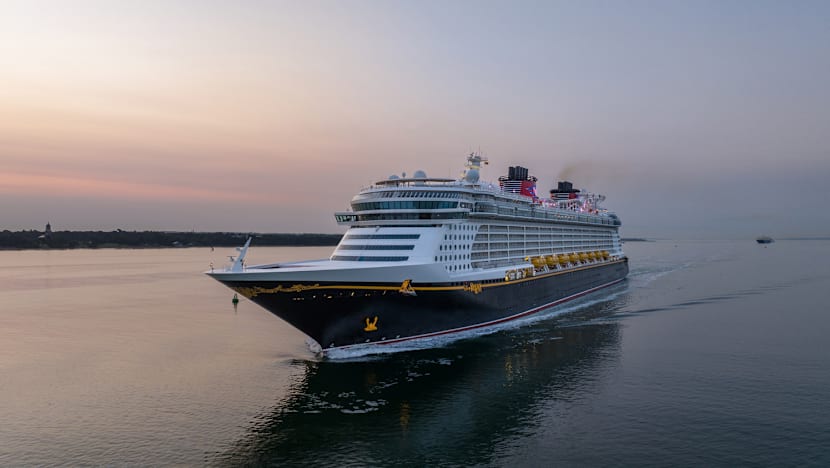
Thom Puiman’s first foray into “seacationing” was a cruise to nowhere in 2020.
The voyage was a socially distanced jaunt from Singapore out into international waters without any stops — a short-term solution for an industry hit hard by the COVID-19 pandemic.
But for Puiman, it sparked what has become a long-term passion. “It was, at the time, the only sense of normalcy for me, and I started loving taking cruises,” he says.
The 35-year-old technology director, now based in Bangkok, is part of a new wave of cruise-goers that has emerged since the pandemic disrupted global travel — a cohort lured, in large part, by cheaper prices, comprehensive amenities and convenience.
People working in the industry are all too aware of the old joke that cruise lines are stacked with “the newly wed, the overfed and the nearly dead”.
But the demographics of passengers onboard the ever-expanding megaships have, in reality, broadened dramatically, helping the sector defy the gloom that has weighed down much of the travel industry in 2025 in the US and Europe.
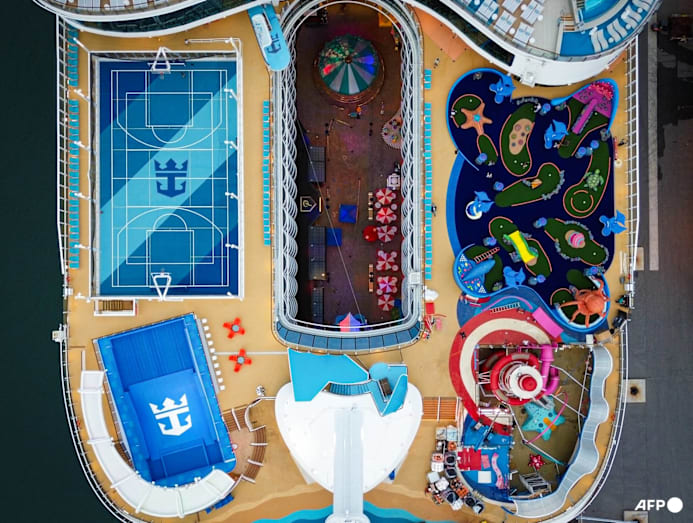
Cruise executives say older Gen Zers, now in their late 20s, and millennials are increasingly choosing ocean-based vacations, pulling down their average passenger age even as populations in the core markets of Europe, Asia and North America get older.
Almost a fifth of 25- to 34-year-olds surveyed by UK travel association Abta had taken a cruise in the past 12 months, up from less than one in 20 in 2019.
That shift is the fruit of a deliberate campaign from the big operators, particularly Royal Caribbean Group, the world’s most valuable cruise company, which has “really led this charge to get younger consumers on the ship and make cruising cool again”, says Sharon Zackfia, an analyst at William Blair.
Royal Caribbean’s strategy has helped the company, now worth about US$70 billion (S$91 billion), to sail well ahead of its closest ocean-faring competitors, US$35 billion Carnival, and US$9 billion Norwegian Cruise Line. Its shares now trade at more than twice their pre-pandemic value and are up around 10-fold from their lowest point at the height of the Covid pandemic.
The cruise industry also appears, at least thus far, to have been insulated from the broader economic uncertainty affecting spending in other parts of the travel sector. American households spent an average of 9 per cent more on cruise holidays this September than in the same month in 2024, according to figures from Bank of America, even as aggregate travel spending dropped 2 per cent, driven by a slump in hotel and airline bookings.
Royal Caribbean, Carnival and Norwegian have all raised their full-year earnings guidance amid sustained booking momentum throughout 2025.
The situation is a far cry from the industry’s devastation during the pandemic, when thousands of crew members and passengers fell ill, ships were denied entry to ports and bookings collapsed.
At one point in February 2020, a single cruise ship — the Diamond Princess, operated by Carnival subsidiary Princess Cruises — accounted for more than half of the world’s confirmed cases of Covid outside China. Seven passengers died during a grim quarantine off the coast of Japan.
“I remember people were debating whether we would ever cruise again,” says 31-year-old influencer Emma Le Teace, who founded the website Cruising Isn’t Just For Old People, later rebranded as EmmaCruises, in 2016.
Those days seem distant now. Cruises added almost 10 per cent more passengers year on year in 2024, hitting a record of almost 35mn.
But signs are emerging that the industry is beginning to lose its post-pandemic momentum. Pent-up demand is at risk of being tapped out, as consumers pare back their holiday spending. At the same time, a push among cruise operators to raise ticket prices could scare off inflation-weary consumers.
After a long stretch of growth, US travel agents surveyed by Morgan Stanley this month reported weakening cruise bookings — suppressed by the government shutdown, elevated inflation and Hurricane Melissa.
Industry figures are hopeful this is a blip rather than the beginning of a trend. “Enthusiasm for cruising remains high”, says analyst Jamie Rollo, “[but] some consumers are adopting a wait-and-see attitude and booking later.”
One of the biggest factors attracting new guests, particularly younger passengers, is the perception of value.
The so-called discount on the cost of a night on a cruise ship versus one in a holiday resort is wider today than it was in 2019. That is partly a function of timing: hotels returned to normality from Covid sooner, and were therefore able to begin increasing their prices before cruise ships, which faced heavy restrictions from the US Centers for Disease Control until July 2022.
Revenues per cruise passenger were up 24 per cent on 2019 in the second quarter of 2025, according to company reports and figures from analytics group STR collated by Barclays Research. Resort rates in the US, meanwhile, climbed 34 per cent in the same period, while rooms in the Caribbean were up 59 per cent.
Cruise operators have been “marketing into that [gap]”, says Barclays analyst Brandt Montour. Lower prices were, at least initially, “a way to get our consumers back to cruising”, says Gianni Onorato, chief executive of the privately held Swiss-Italian operator MSC Cruises.
Value was certainly a factor for Caitlin Nixon, a 28-year-old data analyst from the UK, who took her first cruise with her husband last December. They paid £4,500, including flights, for an all-inclusive two-week trip in the Caribbean on Tui’s Marella line.
“We wanted to go see a part of the world that we hadn’t explored yet and liked the idea of getting to experience a taste of each place rather than spending the same amount to visit only one,” she says. “We found a good deal about a year in advance in a sale and decided to just take the chance that we’d enjoy it.”
Staffing is a significant factor behind cruise liners’ ability to offer lower costs. More than half of global cruise passengers are Americans, but cruises do not have to recruit locally and can access specialised seafarer work permits, which typically cost less than hiring or bringing overseas workers into a country such as the US.
The big operators do not share precise figures, but analysts say the industry recruits heavily from low-income countries such as the Philippines and Indonesia, and has been shielded from much of the wage inflation that has hit hospitality in the US and Europe.
“They’re competing with resorts, which have increased prices due to higher labour costs,” says Montour. “Cruise lines benefit from lower operating costs by drawing on labour from a global pool.”
These cheaper labour costs have also enabled cruise operators to maintain, or even improve, their pre-pandemic service levels, says William Blair’s Zackfia. “Contrast that with land-based hotels [where] there were some compromises made in 2020 — like ending turndown service — that may have continued.”
That perceived value has also helped the industry remain buoyant at a time of rising insecurity, as consumers seek all-inclusive packages where they can predict “exactly what they’re going to pay”, says Jan Freitag, an analyst at real estate information company CoStar.
Cruise operators have an additional incentive for targeting younger passengers. “They’re really trying to capture customers early [because] there’s a tremendous amount of brand loyalty within the industry,” says Bob Levinstein, chief executive of online broker CruiseCompete. “If Royal Caribbean can get you in as a young adult, that’s a long-term investment.”
Nixon, for one, is hooked on Tui’s Marella. “We’d definitely go again and definitely with them,” she says.
The pandemic “was a blessing as much as it was a curse”, says Goldman Sachs analyst Lizzie Dove. “For the first time ever [ . . . ] you couldn’t physically cruise so they finally had a chance to strategise and start over.” That included everything from overhauling cruise lines’ digital booking platforms to rethinking ship design and building more flexible itineraries.
The vessels themselves have also been growing over time to accommodate more passengers and more amenities. The size of the world’s largest cruise ships has doubled since 2000. With a gross tonnage of about 250,000, Royal Caribbean’s Icon of the Seas, which launched in 2024, is five times heavier than the Titanic.
Operators have started deploying these newer, larger ships on short-haul voyages. Royal Caribbean in August sent its megaship Wonder of the Seas on three- and four-night cruises in the Bahamas from Miami. Rivals are replicating this strategy: Carnival in August said it would begin offering short-haul sailings from Port Canaveral onboard its third-largest ship, the Mardi Gras, for the first time from 2027.
These shorter routes are particularly important for first-time cruisers who fear “risking their whole vacation”, says Dove. They also help attract “working professionals [who] have the money but are very time poor”, says Anna Nash, head of MSC’s luxury cruise division Explora Journeys.
Recent convert Puiman’s latest cruise was a four-day trip on Carnival’s Glory from Port Canaveral, Florida, which he tacked on to the end of a business trip in Orlando. He chose the cheapest short-haul sailing on offer: “My goal was to have some sort of getaway: I didn’t care too much about the port of calls or the specific ship.”
Another pillar of the industry’s post-pandemic refresh is a push to repeat the success of Royal Caribbean’s private island, Perfect Day at CocoCay, which reopened in 2019 following a $250mn redevelopment. Featuring beaches, water parks and nature trails, CocoCay is accessed by a purpose-built pier that allows two megaships to dock simultaneously.
The company has continued expanding its portfolio of private destinations, and last month announced it would open a private beach club in Santorini, its first in Europe. Carnival, meanwhile, is developing its $600mn purpose-built Celebration Key on the island of Grand Bahama, and Norwegian is adding a two-ship pier to its private island Great Stirrup Cay so that it can double visitor numbers from 2026.
These developments can be highly lucrative. “It’s great for the cruise lines because they’re not paying port charges and they’re able to capture onshore revenues that they wouldn’t capture in local towns,” says CruiseCompete’s Levinstein.
But the push to build more private destinations has also been motivated by a rising global backlash against overtourism, says Levinstein. The French city of Cannes this summer voted to ban larger cruise ships from docking directly, replicating an earlier move by Venice, while Alaska plans to cap the number of cruise passengers visiting its capital, Juneau, from next year.
MSC chief executive Onorato says cruise ships are “easy targets” because of their physical size, but insists that cruises are “perfect ways to manage overtourism” because they host visitors offshore, rather than taking up city-centre properties, and can spread out the timings of organised tours, while private destinations can reduce congestion in traditional hotspots.
Social media influencers such as Le Teace have become increasingly important for recruiting new customers. Working with influencers is “the new way of supplying information to young adults”, says Onorato.
Visual platforms such as Instagram and TikTok are particularly effective at overcoming “the biggest impediment to getting first-timers”, which is “getting them to understand what cruise is all about”, says Carnival’s chief financial officer, David Bernstein.
Executives, including Royal Caribbean chief executive Jason Liberty and MSC’s Onorato, insist that there is still plenty of room to grow, particularly as the industry remains a small component of the overall travel market. Fewer people took an ocean cruise in 2024 than visited Orlando, home of Walt Disney World, according to figures from the Cruise Lines International Association and Visit Orlando.
Nevertheless, there are some emerging signs of unease. Shares in Royal Caribbean lost 20 per cent in the weeks after the company’s third-quarter earnings report in late October failed to meet investors’ lofty expectations even as it raised annual profit guidance.
Liberty dismissed the steep drop in his company’s shares, saying investors were simply “hoping for a different level of perfection” and that there was “a lot of noise around the [US] consumer that has nothing to do with us”.
Still, some believe this could be a turning point for the investor enthusiasm that helped stretch Royal Caribbean’s valuation. The company’s latest report “does seemingly mark the end of a long string of ever-higher estimate revisions across the cruise industry”, says Citi analyst James Hardiman.
Industry executives, meanwhile, are now increasingly focused on driving higher returns from every passenger — a move that some analysts fear could dent the value proposition that has helped attract new and younger customers in recent years.
Raising ticket prices is “a priority”, says Carnival chief financial officer Bernstein. “I honestly believe that we should be charging more than land-based resorts — but if we can just close the gap, we’re going to be doing incredibly well.”
Bernstein is not the only one thinking this way. “For all the services and amenities and activities that we bring [ . . . ] we feel that for what we deliver there’s an opportunity for us to get paid more,” says Royal Caribbean’s Liberty.
But economic pressures could make it tough to pursue this objective of narrowing — or even eliminating — the so-called “discount” to land-based resorts.
Barclays’ Montour said in a note that cruise liners such as Royal Caribbean were now operating “in a world where all of leisure travel just has less pricing power”. Going forward, he added, the industry would probably be unable to grow “quite as robustly” as it had in recent years.
Liberty says Royal Caribbean’s guests are “strong” financially. “They have great jobs. They have great balance sheets and bank accounts. And they have a strong desire to vacation and build experiences and memories with their friends and family,” he says. “But, we’re also not immune to what’s generally happening in the environment.” Consumers, he adds, may simply “not be willing to pay like last year”.
Stephanie Stacey © 2025 The Financial Times.
This article originally appeared in The Financial Times.
Comments are closed.