
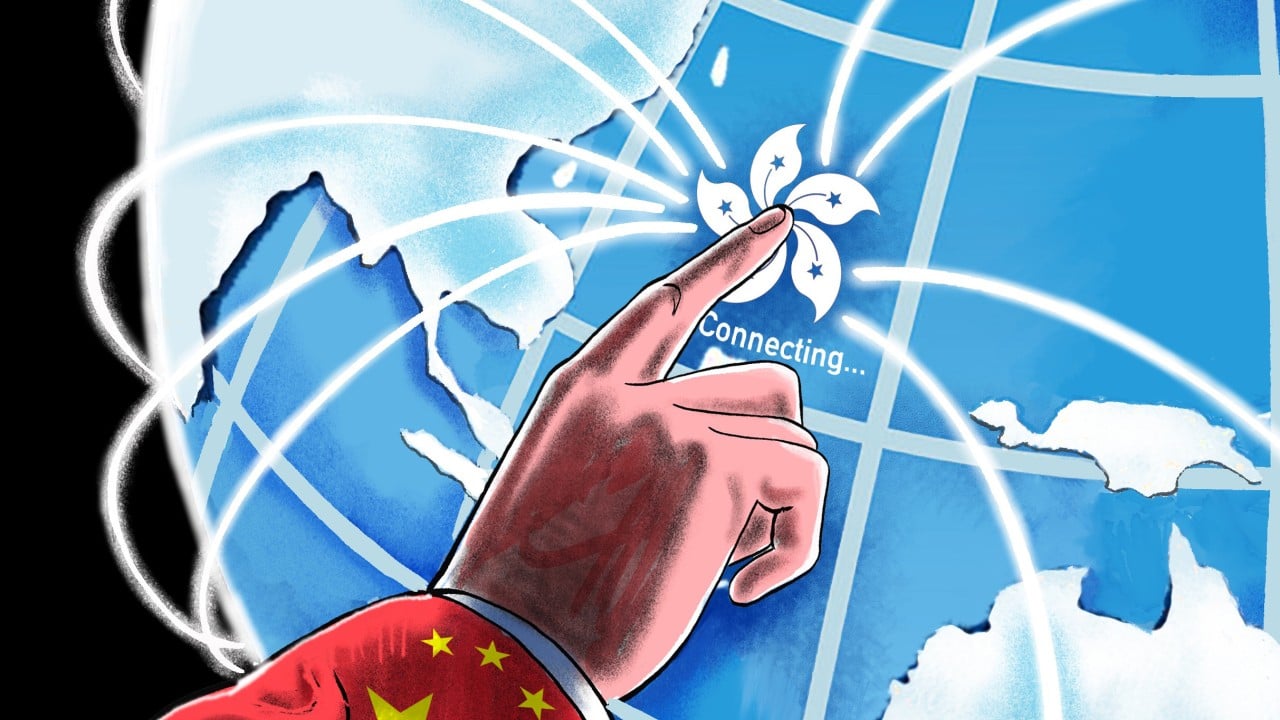
A quiet transformation is weaving itself into the fabric of Hong Kong. In recent years, the city’s social and business circles have been energised by a wave of newcomers from across the Chinese mainland. They have brought with them a culinary revolution – restaurants serving flavours from fiery Sichuan to delicate Zhejiang now dot neighbourhoods once dominated by Cantonese fare.
And these tables are magnets for a new cohort of ambitious entrepreneurs, who speak of supply chains stretching into Africa and Latin America, of factories in Southeast Asia and the formidable obstacles they face: labyrinthine foreign regulations, cultural disconnects and volatile tax regimes. Their stories often conclude with a shared revelation: their first step onto the global stage should have been taken, not in a distant foreign capital, but here in Hong Kong.
This insight gets to the heart of Hong Kong’s evolving opportunity in
China’s global drive. Hong Kong’s traditional role as a gateway stemmed from its unique position connecting the Chinese mainland with the world, facilitating the flow of goods, capital and personnel since China’s reform and opening up. Now, however, that role has undergone a profound evolution: Hong Kong has emerged as a strategic bridgehead for Chinese enterprises, with more mainland firms choosing to establish their core operations and regional headquarters in the city.
Among the regional headquarters in Hong Kong, those with mainland Chinese parents made up the largest group. According to InvestHK’s annual survey, the city hosted 9,960 companies of non-local parentage last year. Mainland Chinese companies constituted the largest group with 2,620 offices, including 420 regional offices and 310 regional headquarters. These entities help cement Hong Kong’s status as a hub for mainland enterprises’ global expansion.
China’s global initiative is unprecedented in scale and scope. Mainland enterprises are leveraging Hong Kong as a strategic test bed for global expansion strategies, testing products before launching them into key emerging markets like Southeast Asia and the Middle East. This has grown more significant amid China’s challenges with US and European tariffs and protectionist policies. Hong Kong offers the closest “international” environment in which to experiment under a distinct legal and cultural framework unlike the mainland’s.
The parallel boom in regional Chinese cuisines, even as traditional Cantonese restaurants face headwinds, is a microcosm of this dynamic: winning over Hongkongers’ palates is a proxy for winning over global customers. Success here builds the operational confidence and brand legitimacy needed for international expansion.

02:41
Mainland Chinese F&B chains expand into Hong Kong amid changing trends
Mainland Chinese F&B chains expand into Hong Kong amid changing trends