
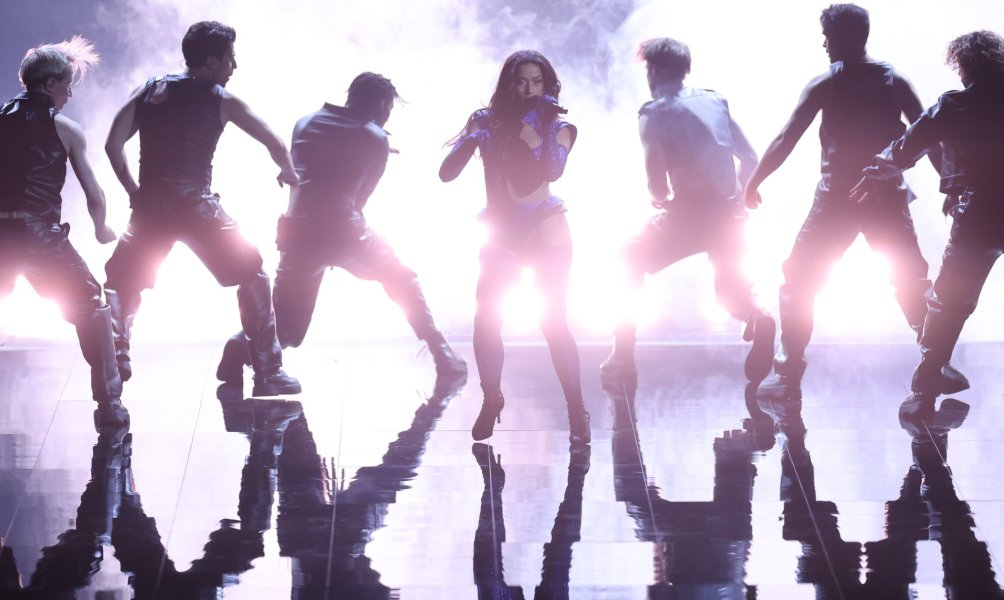

So far, Spain, Ireland, Iceland, Slovenia and the Netherlands have announced that they are boycotting the 70th European Song Contest in Vienna. The cause of contention for the broadcasters is Israel’s participation, as the country faces criticism for its actions in the Gaza war. The European Broadcasting Union (EBU) decided last week that all member broadcasters wishing to do so may take part in the competition.
Open/close all quotes
Fulfil moral responsibility
In an appeal published by Le Soir, artists and representatives of various organisations call on Belgium’s French‑language broadcaster RTBF to withdraw from the contest:
“Our public media cannot expose millions of viewers to Israeli propaganda. We call on the board of the French‑language public broadcaster to refuse to take part in rehabilitating a state that is committing the worst of all crimes. … As a public service broadcaster, RTBF has a moral responsibility to ensure that its participation in the Eurovision Song Contest is consistent with respect for human rights and democratic values.”
A reflection of Europe’s division
The Irish Times finds it unsurprising that wars and crises are dominating the ESC narrative:
“Such controversies clearly show that cultural or sporting events are by no means ‘above politics.’ The history of the Eurovision Song Contest has always been marked by national rivalries and tensions that have influenced both the show and sometimes its outcome. Today, the competition is shaped by two wars. First, Russia and Belarus were excluded after the invasion of Ukraine. Now, four more countries have joined in rejecting Israel’s participation. In this respect, the modern Song Contest mirrors a troubled and increasingly divided continent.”
Israel is not Russia
Allowing Israel to take part is the right decision, writes the Frankfurter Allgemeine Zeitung:
“Had Israel been excluded, it would not have had the slightest effect on the Middle East conflict, which is already beyond complex. It would instead have signalled that Europe’s public broadcasters equate the only democracy in the Middle East with Russia, which has been banned from the ESC since its invasion of Ukraine. Specific actions by Israel in Gaza and elsewhere can be criticised, but the country is defending itself against attacks aimed at its destruction, and its citizens have the right to decide through free elections how that defense is carried out. The real problem is that there are public broadcasters in Europe that are either unaware of or indifferent to this distinction.”