

NEWYou can now listen to Fox News articles!
The first study to evaluate the link between Alzheimer’s disease and body weight found a significant association.
Researchers at Washington University Medicine in St. Louis, Missouri, discovered that Alzheimer’s blood biomarkers increased 95% faster in people with obesity than in non-obese individuals.
The study, which was presented Tuesday at the annual meeting of the Radiological Society of North America (RSNA) in Chicago, investigated five years of data from 407 participants from the Alzheimer’s Disease Neuroimaging Initiative, including PET scans (medical imaging) and blood samples.
ALZHEIMER’S DECLINE COULD SLOW DRAMATICALLY WITH ONE SIMPLE DAILY HABIT, STUDY FINDS
The researchers assessed the association between Alzheimer’s biomarkers and body mass index (BMI), according to a press release.
When the participants were first measured, a higher BMI was associated with lower Alzheimer’s blood biomarkers due to blood dilution, since people with higher body weight often have larger blood volume.

Alzheimer’s blood biomarkers increased 95% faster in people with obesity, the study found. (iStock)
But when the researchers followed the same participants over a longer period, they found that those with obesity developed a greater Alzheimer’s disease burden than those without obesity.
NEW VITAMIN COMPOUND SHOWS PROMISE FOR REVERSING ALZHEIMER’S DAMAGE TO THE BRAIN
In analyzing how the Alzheimer’s biomarkers matched up with PET scan results, they noted a buildup of amyloid plaques in the brain — a central hallmark of the most common type of dementia.
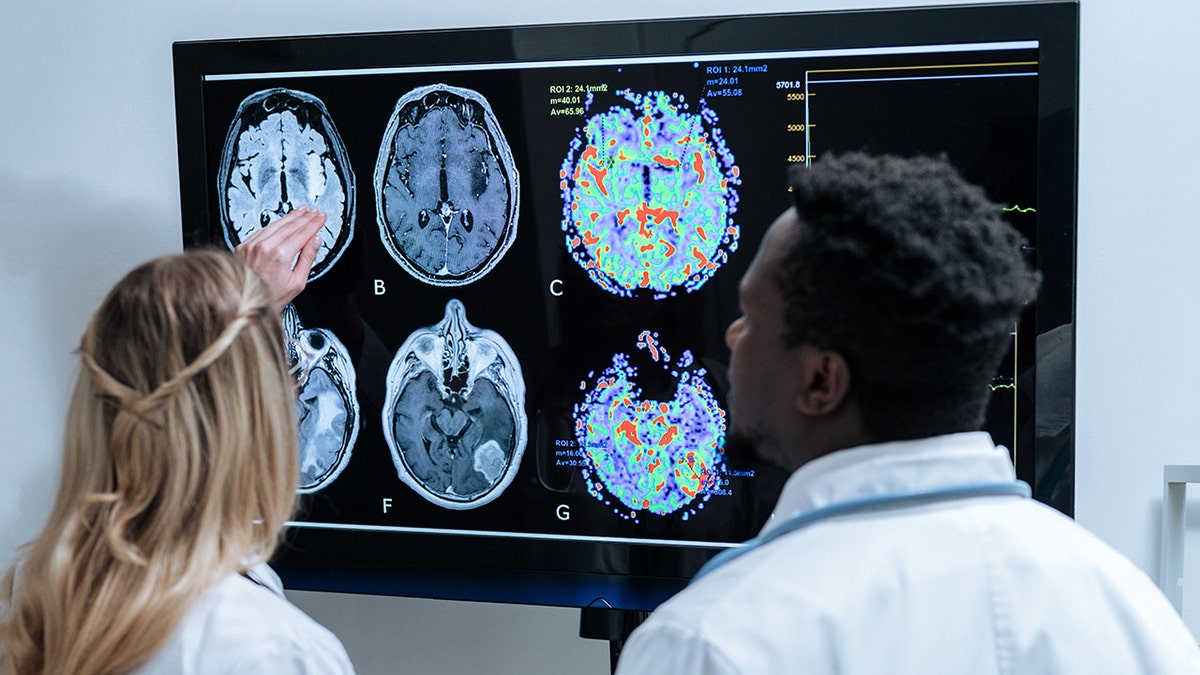
PET scans reveal a buildup of amyloid plaques in the brain – a “central hallmark” of Alzheimer’s. (iStock)
In an interview with Fox News Digital, the study authors discussed the impact of these findings.
CLICK HERE FOR MORE HEALTH STORIES
“Our study shows that over a five-year period, obesity is associated with a steady increase in Alzheimer’s-related pathology,” said lead author Dr. Soheil Mohammadi, a post-doctoral research associate at the Mallinckrodt Institute of Radiology, part of WashU Medicine.
“What surprised me was how sensitive the blood biomarkers were in detecting this relationship. They captured subtle changes even better than brain imaging.”
CLICK HERE TO SIGN UP FOR OUR HEALTH NEWSLETTER
Senior study author Dr. Cyrus Raji, associate professor of radiology and neurology at Washington University, noted that the progression of Alzheimer’s is “influenced by pathologies happening overall in the body, such as obesity.”
“It is critical to preserve brain health by optimizing body health as well,” he said.

“It is critical to preserve brain health by optimizing body health as well,” the lead researcher said. (iStock)
Recent clinical trials (EVOKE and EVOKE+) have explored whether GLP-1 drugs such as semaglutide (Ozempic) could slow cognitive decline in people already diagnosed with early Alzheimer’s disease.
“While the recent Evoke trials failed to show an effect of Ozempic for the treatment of Alzheimer’s dementia, our work should motivate future trials to determine if this class of drugs can help prevent Alzheimer’s by treating obesity earlier in life,” Raji said. “Caretakers and clinicians are key partners in making such trials happen.”
CLICK HERE TO DOWNLOAD THE FOX NEWS APP
One limitation of this research, according to Mohammadi, is the fact that not all body fat carries the risk of Alzheimer’s disease.
“Our prior work shows that belly fat, rather than fat under the skin, drives much of obesity’s impact on the brain,” he said. “Future studies should distinguish between these fat types instead of treating obesity as a single category.”
“Our prior work shows that belly fat, rather than fat under the skin, drives much of obesity’s impact on the brain.”
Fox News senior medical analyst Dr. Marc Siegel, who was not involved in the research, said he considers this a “very important study.”
“I think this finding makes complete sense, because obesity leads directly to inflammation and insulin resistance, which provoke neuro inflammation — one of the pillars of Alzheimer’s development,” he told Fox News Digital.

Other risk factors that often coincide with obesity — such as diabetes, hypertension and inflammation — may also contribute to Alzheimer’s biomarker changes. (iStock)
The study did have some limitations, the researchers noted.
The study sample was relatively small and specific, and may not represent the general population. Also, the BMI measurement can’t distinguish between fat and muscle mass or reflect differences in fat distribution that may influence Alzheimer’s risk.
The study also relies on observational data, which can reveal associations but can’t prove that obesity directly causes faster Alzheimer’s pathology, the researchers noted.
TEST YOURSELF WITH OUR LATEST LIFESTYLE QUIZ
Other risk factors that often coincide with obesity — such as diabetes, hypertension and inflammation — may also contribute to Alzheimer’s biomarker changes.
This initial research sparks the need for larger studies in more diverse populations with longer follow-ups.
Angelica Stabile is a lifestyle reporter for Fox News Digital.