
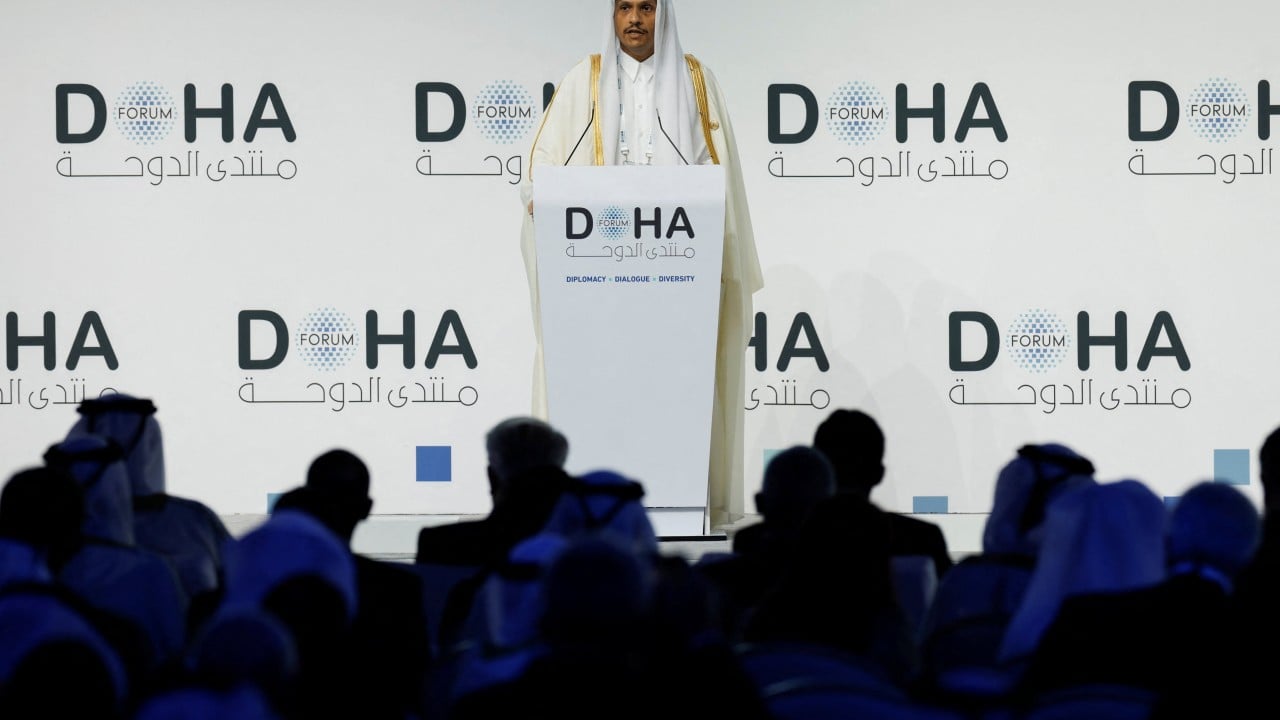
The latest Doha Forum laid bare an uncomfortable truth: Europe is losing its seat at the table of global affairs. The convergence of the Trump administration’s newly released
national security strategy and pointed remarks from senior US officials has exposed the continent’s precarious position in a rapidly transforming landscape – one where Europe increasingly finds itself relegated to the sidelines.
At the forum, the message from US ambassador to Nato Matthew Whitaker was blunt and unequivocal: the European Union should take responsibility for its own defence; this is not America’s job. Pressed about US commitment to European security, Whitaker said that while the United States would remain a strong ally, “we have expectations”.
These expectations, he explained, encompass increased defence spending and living up to traditional shared values such as greater protections for freedom of speech.
Forum discussions, however, showed a widening wedge between US and European values, with the US national security strategy in particular revealing a fundamental misalignment of priorities.
European delegates are concerned the Trump administration has deprioritised democracy, with its strategy document stating a willingness to work with “governments with different outlooks with whom we nonetheless share interests and who want to work with us”. This signals the administration’s preference for economic opportunism over ideological alignment – a world view increasingly at odds with Europe’s stated values.
Besides this, the strategy put on paper what the Trump administration has maintained from the start: Europe must do much more for its own defence. At the forum, Whitaker maintained that while Article 5, Nato’s commitment to collective defence, is “ironclad”, “Article 3 comes before Article 5”. Article 3 refers to the North Atlantic Treaty Organisation’s requirement that members maintain robust defence capabilities.
Comments are closed.