
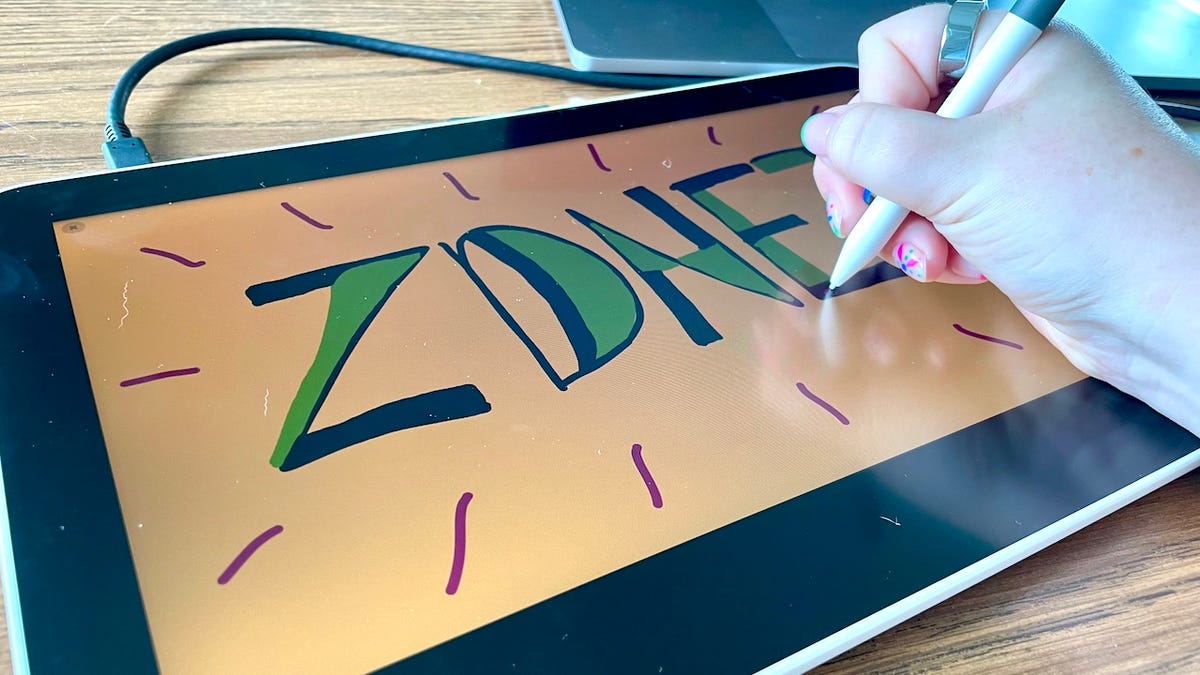
Drawing tablets offer the kind of flexibility traditional tools cannot match. Whether its sketching, painting, photo editing, or 3D design, the right tablet can bring your work to life. However, beginners and professionals alike can get confused with the myriad options out there. That’s why we went hands-on with the best there is.
Drawing tablets come in two main types: pen displays, which have built-in screens for direct interaction (like an iPad), and pen tablets, which connect to an external monitor. We tested both, including the iPad Pro and Wacom Intuos Pro, to help you find the right tool for 2026.
Best tablet deals of the week
Deals are selected by the CNET Group commerce team, and may be unrelated to this article.
What is the best tablet for drawing right now?
Artists adapt to working with new mediums, and the best drawing tablets make it easy to start creating on a screen. Our top pick for tablet drawing is the Apple iPad Pro (8th generation) thanks to its easy user interface and premium screen experience. We also included other drawing and graphics tablets that ZDNET staff has tested and spoke to graphic designers and digital artists to get their take on other top tablets for drawing.
Also: Best digital notebooks
In our January update, we replaced the 7th-generation iPad Pro with the 8th-generation iPad Pro as our top pick based on hands-on and lab testing.
Get more in-depth ZDNET tech coverage: Add us as a preferred Google source on Chrome and Chromium browsers.
The best drawing tablets of 2026
Why we like it: Apple’s 2025 iPad Pro lineup is by far the most capable and impressive iPad lineup we’ve seen, making it easy to make it our top pick. The design is much slimmer than previous Pro models and includes Apple’s powerful M5 processor. This chip outperformed every other iPad and two Samsung tablet models by a landslide in our Geekbench 6 testing.
The tablet is faster and more consistent in rendering graphics and loading assets when we tested it against the M1 MacBook Pro, and is even noticeably snappier than the M3 iPad Air.
Who it’s for: ZDNET’s Maria Diaz said that Apple “finally made the iPad the intuitively responsive tablet I’ve always wanted from Apple.” “I used the iPad Pro with the M5 processor and cellular connectivity, taking it anywhere I could,” she wrote, adding, “I tested it to edit 4K resolution video on Final Cut Pro for iPad, which was far more seamless than editing on Premiere on my M1 MacBook Pro, and to transfer files to and from smartphones, tablets, and cloud services.”
Review: Apple iPad Pro (8th-generation)
The tablet has Apple Pencil Pro compatibility, giving you a professional feel while allowing you to draw by hand. The Apple Pencil Pro is by far Apple’s most capable stylus, and includes a squeeze function to switch between tools, colors, and line weights, a gyroscope barrel roll for precise brush and pen control, and custom haptic feedback that you can feel via a pulse.
Who should look elsewhere: This particular iPad is for power users for the highest of high-end professionals. It comes at a high price point–though not the most expensive on our list. There are plenty of other budget-friendly options for drawing tablets if you need something less expensive.
Apple iPad Pro tech specs: Display: 11- or 13-inch Ultra Retina XDR OLED display | Processor: Apple Silicon M5 | Dimensions: 9.83 x 6.99 x .21 inches or 11.09 x 8.48 x 0.20 inches | Connections: USB-C connector with support for Thunderbolt / USB 4
Read More
Show Expert Take Show less
Why we like it: If you’re shopping on a budget, Huion drawing tablets have come a long way in the last few years. While some models can cost up to $600, this pen display tablet is an excellent budget option at just $250.
This Huion tablet has four user-defined and customizable express keys and a touch bar to control canvas zooming, brush adjusting, and page scrolling.
The display’s 120% sRGB color gamut volume presents 16.7 million colors vividly. In addition, the anti-glare technology reduces glare while working in a brighter setting to shorten the distance between the pen nib and the cursor.
Who it’s for: Chuan Shin, a freelance concept artist, told ZDNET that he works exclusively with Huion tablets. “Huion makes the best tablets when it comes to value and cost,” he said. “Huion also does not have issues with driver updates, which I appreciate.”
Even though this is a pen display tablet, this model still requires you to connect it to a computer or laptop for it to work. Still, Reddit users note that the display screen is both glare and scratch-resistant.
Who should look elsewhere: This budget drawing tablet won’t have all the high-end features some artists may need, so we recommend a Wacom tablet over this option.
Huion Kamvas Pro 13 tech specs: Dimensions (L x W x H): 13.78 x 7.82 x 0.43 inches | Active area: 10.09 x 5.68 inches | Compatibility: Linux (Ubuntu), Mac OS 10.12 and above, Windows 7 and above | Pressure levels: 8,192 and ±60 pen tilt support
Read More
Show Expert Take Show less
Why we like it: Wacom is undoubtedly one of the industry leaders in drawing and graphics tablets, and it just upgraded the Intuos Pro in 2025. Some of those changes include a new, more advanced pen, moving the dials and buttons from the side to the top, and thinner bezels to allow a larger working area on the tablet’s surface. What remains is that the device still has virtually no lag and 8,192 levels of pressure sensitivity, and is available in three sizes to suit any artist’s hand. The Wacom Intuos Pro is the best drawing tablet on the market for professional artists like Portia McLean, who used the Intuos Pro for visual effects on Game of Thrones.
The tablet’s lightweight design makes it easy to use on your desk or lap. You can also customize everything from the tablet’s ExpressKeys to the Pro Pen 3’s buttons, depending on your favorite shortcuts.
Who it’s for: ZDNET writer Maria Diaz went hands-on with the tablet and said it pleasantly surprised her. “The Wacom Intuos Pro also lets you navigate your computer like a giant trackpad with a pen,” she said, adding, “You can use shortcuts to work on different programs that the tablet will recognize when you switch between them. For example, you can use your tablet for a more intuitive photo or video editing experience on Adobe Photoshop or Premiere Pro, respectively, which has been the biggest use I’ve gotten out of it.”
Review: Not sold on screenless drawing tablets? This new Wacom won me over
Who should look elsewhere: If you’d rather work with a screen display, this isn’t the tablet for you. However, the Wacom One 13 Touch is the same price as the Wacom Intuos Pro, but has a screen display.
Wacom Intuos Pro tech specs: Dimensions (L x W x H): 11.46 x 8.11 x 0.04 inches | Active area: 8.7 x 5.8 inches | Compatibility: Mac OS and Windows | Pressure levels: 8,192
Read More
Show Expert Take Show less
Why we like it: Artists who are Wacom fans but prefer a pen display over a pen tablet should look no further than the Wacom Cintiq Pro 24. Prices start at $1,900, but you get an incredible display, reliable software, and an excellent drawing experience.
The Wacom Cintiq Pro 24 comes in four sizes 16, 24, 27, or 32 inches. No matter what size you get, you can expect a 4K resolution display with industry-leading color accuracy including 99% Adobe RGB coverage. You can see every tiny detail and stroke of your artwork, design, or photographic projects.
Who it’s for: Jim Mortensen, a director, storyboard artist, and writer for animation, said he only uses Wacom tablets. After using the Wacom 21UX for 15 years, he upgraded to the Cintiq Pro 24 and said he couldn’t be happier.
“Wacom products have been incredibly reliable for me,” he said. “The driver software is consistently reliable compared to other companies, and their software and hardware support have always been great. It will take a LOT for me to switch away.”
The tablet utilizes the same Pro Pen 2 as the Intuos Pro, so you’ll still get that pen-to-paper feel even on a tablet screen. Reddit users said they ultimately opted for the Cintiq Pro 24 thanks to its 4K resolution, glass surface and sheer precision.
Who should look elsewhere: This Wacom tablet is the most expensive option on our list. If you still want something high-end but a bit cheaper, the iPad Pro is worth considering instead.
Wacom Cintiq Pro 24 tech specs: Dimensions (L x W x H): 26.6 x 15.5 x 1.9 inches | Active area: 20.6 x 11.6 inches | Compatibility: Windows 7 or later, macOS X 10.11 or later | Pressure levels: 8,192
Read More
Show Expert Take Show less
Why we like it: All of these drawing tablets come with a stylus pen, but this tablet from Xencelabs allows you to add more accessories to further enhance your experience. You’ll get combo nibs, a drawing glove, a Quick Keys remote, and two battery-free pens for 2D and 3D design. Multiple verified Amazon customers said that the customization options of this drawing tablet is ultimately what drove them to purchase it.
It’s a pen tablet, so there is no display, but it is built with a gently curved armrest on the sides and is only 8mm thick, making it super comfortable to use.
Who it’s for: Nick Saporito, a graphic designer who has been teaching for over 10 years how to use design software and drawing tablets on his YouTube channel, likes the precision and surface area of the Xencelabs Pen Tablet.
“The feature that stands out to me the most is the programmable controller it comes with,” Saporito said. “It can be used to create custom key bindings for whatever features you most commonly use. For example, you can program one of the buttons to ‘Undo’ by binding it to Control + Z.”
He also added that the glove that comes with the bundle keeps the tablet from accidentally registering your hand as a pen stroke. In addition, the pens’ various removable tips allow for different types of brush strokes and detailing.
Who should look elsewhere: Certified buyers of the Xencelabs tablet bundle say that while the tablet worked great at first, it didn’t last as long as they had hoped before things like buttons and controls stopped working. If you need something for the longer term without upgrading for a few years, you may want to look at other options.
Xencelabs tech specs: Dimensions (L x W x H): 12.61 x 9.16 x 0.3 inches | Active area: 10.33 x 5.8 inches | Compatibility: Windows 10 and above, macOS 10.12 and newer | Pressure levels: 8,192
Read More
Show Expert Take Show less
Why we like it: For digital artists who prefer a pen display, the Wacom One 13 Touch is a great option.
This drawing tablet stands out with its touchscreen. A 920 x 1080 Full HD resolution display allows for 10-finger multi-touch gestures, giving artists a new dimension of intuitive use and interaction. You can utilize several gestures like scrolling, panning, and zooming during the creative process while you’re drawing in a program, or you can turn it off altogether.
Who it’s for: I was able to go hands-on with this drawing tablet and was very impressed by the pen-to-paper feel. The stylus had great palm rejection technology, and Wacom promises you never have to charge it.
Review: This Wacom drawing tablet is loaded with perks digital artists will love
The Wacom One 13 Touch is a great fit for artists who prefer a screen display but still want to use programs like Adobe or Corel Painter.
Who should look elsewhere: While the tablet is advertised by Wacom as one for aspiring artists, Reddit users note that its higher price tag of $600 might be better off for artists already familiar with drawing tablet.
Wacom One 13 Touch specs: Dimensions (L x W x H): 13.2 x 8.7 x 0.1 inches | Active area: 11.6 x 6.5 inches | Compatibility: Windows 10 and over, Mac OS 11 and over, Chrome OS, Android 8 and over | Pressure levels: 4,096
Read More
Show Expert Take Show less
Overall, the eighth-generation iPad Pro is my top choice when it comes to the best drawing tablets because of its ease of use and Apple Pencil Pro compatibility. Here’s a chart with key specs for all the drawing tablets so you can better compare the iPad Pro to all the other drawing tablets on my list.
|
Drawing tablet |
Price |
Active area |
Pen pressure levels |
External screen required? |
|
iPad Pro (8th-gen) |
$999 |
9.74 x 7.02 inches or 11.04 x 8.46 inches |
N/A |
No |
|
Huion Kamvas Pro 13 |
$320 |
10.09 x 5.68 inches |
8,192 |
Yes |
|
Wacom Intuos Pro |
$500 |
8.7 x 5.8 inches |
8,192 |
Yes |
|
Wacom Cintiq Pro |
$1,900 |
20.6 x 11.6 inches |
8,192 |
No |
|
Xencelabs Pen Tablet Bundle |
$265 |
10.33 x 5.8 inches |
8,192 |
Yes |
|
Wacom One 13 Touch |
$500 |
11.6 x 6.5 inches |
4,096 |
Yes |
Wondering which type of drawing tablet to get? We’ve broken down the different categories.
- Pen tablet: These devices are screenless, generally have a lower price point, and are more portable. They require an external connection to a laptop or computer, so you draw on the tablet while looking at your computer screen. Examples include the Wacom Intuos Pro and the Xencelabs tablet.
- Pen display: Tablets that are pen displays have built-in touchscreens that allow you to draw directly on the tablet. Unlike a pen tablet, you see everything you’re working on via the tablet’s screen.
- Pen computer: Pen computers are larger, more expensive devices that combine a whole studio of creative tools in your hands. We didn’t include a pen computer as a top pick since they are for advanced professionals and start at $3,000.
To decide which drawing tablet to buy, you should first consider what you plan to draw. Size, express keys, and pressure levels all come into play, but it ultimately comes down to your personal preferences.
Here is a decision matrix on the best drawing tablets for you to refer to before making your big purchase:
|
Choose this drawing tablet… |
If you want… |
|
iPad Pro (8th-gen) |
A powerful tablet that’s easy to use. Its compatibility with the Apple Pencil Pro allows for even more standout features. |
|
Huion Kamvas Pro 13 |
A budget-friendly drawing tablet with touch bar controls and express keys. |
|
Wacom Intuos Pro |
A drawing tablet built for professionals. It has virtually no lag and 8,192 levels of pressure sensitivity in its Pro Pen 2. |
|
Wacom Cintiq Pro |
A high-quality drawing tablet that’s worth the splurge. Its four screen sizes have 4K display and industry-leading color accuracy. |
|
Xencelabs Pen Tablet Bundle |
A drawing tablet that comes with accessories like a drawing glove and combo nibs to aid your creative process. |
|
Wacom One 13 Touch |
A touchscreen tablet with handy gestures and a pen-to-paper-like experience. |
Before you buy, there are several important things to consider in a drawing tablet.
- Active area: The active area is the area in which you can actually draw on a tablet and is important to consider. This will be the size of the screen, if it has a screen display, or the size of the area you can actually draw on that has built-in pressure levels, if it’s a screenless display.
- Accessory compatibility: Consider tablets that are compatible with a number of accessories including different stylus pens, software, laptops and PCs, and more.
- Size: Drawing tablets come in various sizes, from small to large. Depending on your type of creative work, you may opt for a bigger device to really capture the tiny details.
- Price: Drawing tablets greatly vary in price — from $50 all the way up to $2,200. Luckily, there is something for every price range.
The ZDNET team chose all of the tablets included in this list based on their performance when tested in the real world. When we test tablets, we typically follow the same routine for each one to see which performs best.
- Display: We measure the brightness level in different lighting conditions and assess color accuracy. We also compare the display’s performance with what the manufacturer promised, test the screen’s responsiveness to touch, and assess the performance of any extra features like a manufacturer’s stylus.
-
Performance: For real-world performance metrics, our reviewers measure how quickly the tablet reacts to input, assess game performance and frame rates, test how the tablet handles having multiple apps running simultaneously, measure the time it takes to launch apps, and even assess the tablet’s temperature during intensive tasks.
-
Battery life: We test different scenarios for battery life, including measuring how long the battery lasts while streaming, web browsing, using productivity apps, and playing games.
-
Camera and audio: For cameras, we evaluate features like resolution, aperture, low-light performance, autofocus accuracy, dynamic range, color accuracy, image quality, sharpness, and video quality. For audio, we look at the sound quality and overall listening experience, including audio clarity at different volumes, stereo separation of left and right audio channels, maximum volume level in various environments, and if there is perceived distortion.
For a deeper look into our testing process, check out our comprehensive tablet testing methodology.
Those who would benefit from drawing tablets include graphic designers, artists, architects, or anyone who does creative drawing work. Students in these types of fields would also benefit from a drawing tablet depending on their courses.
It all depends on your use case and personal preference. For example, Jim Mortensen, a director, storyboard artist, and writer for animation, prefers tablets with screens, otherwise known as pen displays.
“Direct drawing changes your art and thinking in ways that you can’t predict,” he said. “Art is hard enough without not being able to look right at what you’re drawing. Sure, they’re more expensive, but if you have the means, I highly recommend it.”
On the other hand, screenless drawing tablets, also known as pen tablets, generally have a lower price point and are more portable. Keep in mind these tablets require a connection to a computer and can take some time to get used to, as you’ll need to draw on the tablet while looking at your computer screen.
Overall, the best drawing tablets allow you to digitally create in different ways based on the art and artist. It’s up to your preference whether you want to work with a drawing tablet that has a built-in touchscreen or a special pressure-sensitive surface.
Wacom tablets are the preferred choice of most professional digital illustrators, animators, and designers. Wacom is the gold standard in the industry. Its tablets offer an unmatched drawing experience with a highly responsive pen-to-paper feel.
If you’re using a screenless tablet for drawing for the first time, it may take up to a few weeks to get used to. Try playing with the tablet a bit every day to get used to drawing on it. Also be sure to get a grasp of whatever software you choose, since each drawing software is a little different.
Most drawing tablets need specific styluses, especially if they have a unique screen or need an external display to draw with. However, a majority of drawing tablets come with a compatible pen, so you won’t have to buy one separately.
Latest updates
- In our January 2026 update, we added the M5 iPad Pro as our top overall pick, replacing the M4 iPad Pro. We also added more details on why we like a product and who it’s for in each product description.
Alternative drawing tablets to consider
The Movink tablet from Wacom is perfect for art students thanks to its portable design and free software trials of programs like Clip Studio Paint EX, Rebelle 7, Capture One, Magma, and more.
Read More
Show Expert Take Show less
The base-model iPad is significantly cheaper than the Pro, starting at $449, and is still a great tablet to draw on. Just keep in mind you won’t be able to use power-consuming, heavier apps like Final Cut Pro.
Read More
Show Expert Take Show less
Why get a graphics tablet and a laptop when you can get 2-in-1? This tablet can serve as a computer with an attachable keyboard and is preloaded with Windows 11.
Read More
Show Expert Take Show less
ZDNET sourced external industry experts for this article. Here is more information about them:
- Chuan Shin: A freelance concept artist and illustrator who has worked on AAA games such as Street Fighter V and more.
- Jim Mortensen: A director, storyboard artist, and writer for animation based in LA.
-
Nick Saporito: A graphic designer of over 10 years, who teaches how to use design software and drawing tablets on his YouTube channel, which has 483K subscribers.
Tablets Reviewed & Compared
ZDNET Recommends
Editorial standards