Millions of Spaniards stage first general strike in 14 years as anger rages over housing
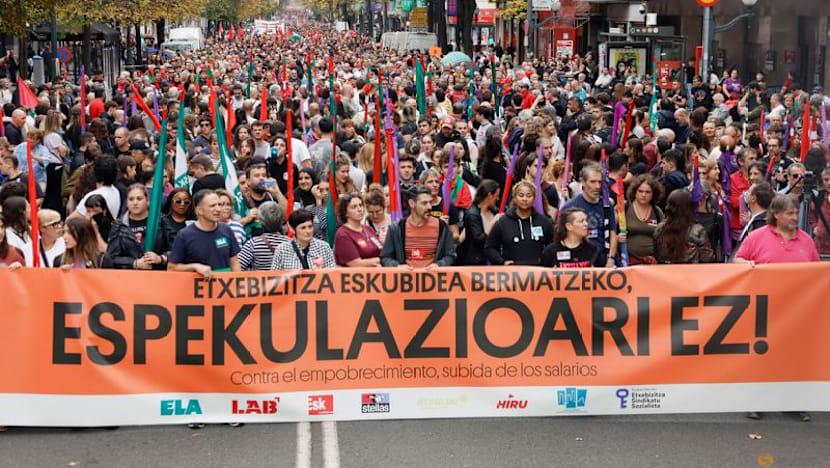
Protesters carry a banner reading “Speculation No. Guarantee The Right To Housing”, during a strike over soaring housing costs and stagnant wages, in Bilbao, Spain, Nov 11, 2026. (Photo: REUTERS/Vincent West)
MADRID: Four million Spanish workers took part in a general strike on Wednesday (Nov 11), unions said, enduring stormy weather to set up picket lines in a protest against the country's housing affordability crisis less than three weeks before a snap general election.
It is the first general strike since workers downed tools in 2012 against austerity measures during the euro zone debt crisis. The walkout is backed by Spain's two largest unions, UGT and CCOO, representing more than a million workers, as well as tenants' associations angry about rising rents and evictions.
Spanish Prime Minister Pedro Sanchez hopes to harness voter resentment over housing in the Nov 29 election to shift the political narrative away from corruption cases involving his inner circle and a deadly train crash last month. So far, his Socialist Party still trails in opinion polls.
Unions described the strike as a success even though participation was uneven across Spain, with the strongest support in coastal regions where housing pressures have been particularly acute.
Guess Word Crack the word, one row at a time

Buzzword Create words using the given letters

Mini Sudoku Tiny puzzle, mighty brain teaser

Mini Crossword Small grid, big challenge

Word Search Spot as many words as you can

SHOPS SHUTTERED
On Madrid's Gran Via, one of the capital's main shopping streets, protesters cheered as stores including Primark, H&M and Pull & Bear drew their shutters amid a heavy riot police presence.
"We're going to close the Mango store," the protesters chanted as they jangled sets of house keys above their heads.
Many shops in Barcelona were also closed and boarded up in anticipation of unrest.
Spain has a deficit of about 750,000 homes, which is set to grow to more than a million by 2028, according to the central bank.
With fewer people able to afford a home, renting has increased sharply, putting pressure on that market. The average rental price of €1,176 (US$1,315) is equivalent to about 98.7 per cent of a young person's average monthly salary in Spain, according to the Youth Council of Spain.
"I’m 36 years old and I still can’t move out on my own," said Madrid resident Jesus Gonzalez, who works in a hospital IT department and supports the strike. "Rents just keep going up, house prices just keep going up, and it’s simply impossible."
TURNOUT STRONGEST AT PORTS, AUTO PLANTS
Angela de Miguel, vice president of Spain's main business lobby CEOE, said the strike was counterproductive because small businesses were also affected by the housing crisis, since shortages of homes made recruitment more challenging.
Speaking on state broadcaster TVE, she said the solution was to build more homes and to lower taxes in construction and the home-buying process.
Plans for massive protest marches in the afternoon were threatened by two heavy storms, dubbed Charles and Bruna, with unions suspending a demonstration in the southern port city of Cadiz.
The tenants' union said it still expected participation in the strike to reach 5 million people by the end of the day. Spain has around 23 million workers, according to the national statistics institute.
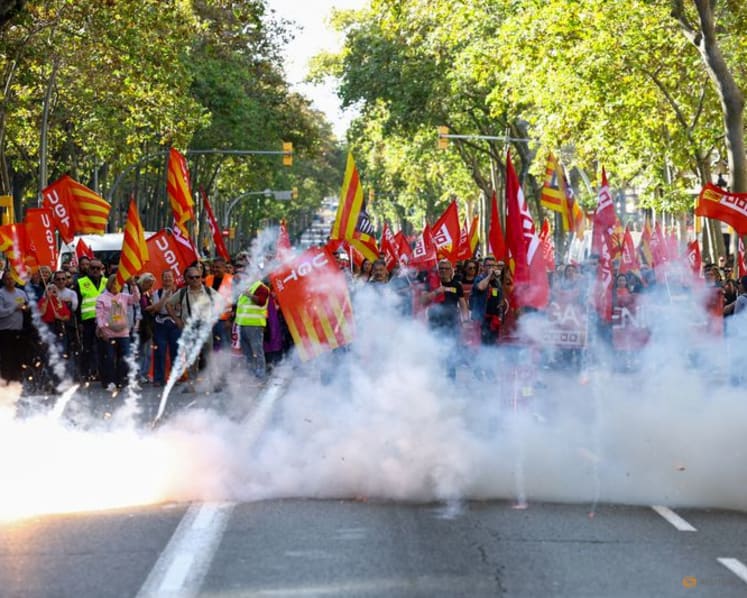
According to UGT and CCOO, participation in the strike reached 90 per cent at ports and in the automotive sector, with "total stoppages" reported at factories including Volkswagen's in Navarre and SEAT's in Barcelona.
Electricity demand dropped by as much as 15.5 per cent between 10am and 11am, according to Spain's grid operator Red Electrica.
Related:

LESS IMPACT DUE TO REMOTE WORKING
Barcelona's metro said no trains would run outside peak commuting hours, while Madrid's metro said peak-hour usage was down 42 per cent compared to the same period last week.
However, with more people able to work remotely and the increasing weight of services in Spain’s economy, the impact of the strike is likely to be less pronounced than in previous years, according to Miguel Cardoso, chief economist at BBVA Research. He estimated that the strike could shave 0.1 per cent-0.2 per cent off Spain’s annual gross domestic product.
Spain's fast-growing hospitality and finance industries are less unionised than the public and industrial sectors.
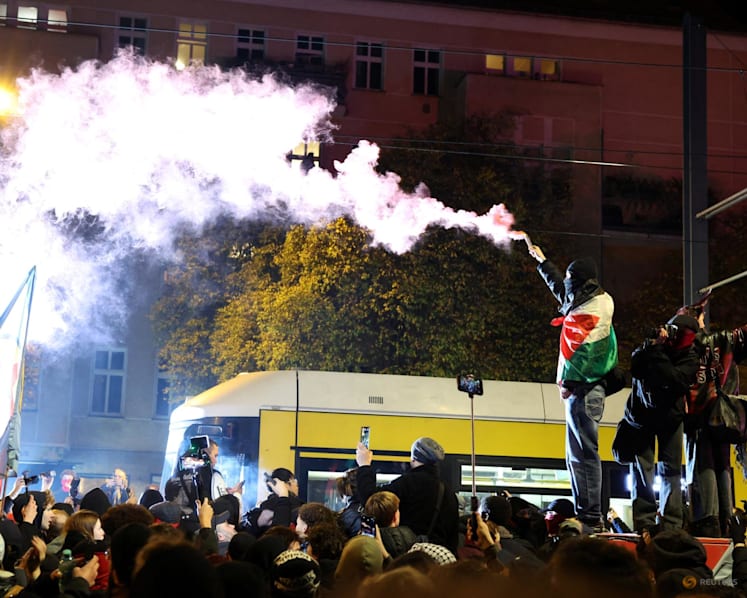
Police had reported 40 arrests by midday from 476 incidents linked to the general strike, including blockades of offices and industrial estates and burning of rubbish containers.
Unions said they would file a criminal complaint against what they described as a “disproportionate” response during a police operation involving tear gas and batons that left 20 protesters injured.
The strike follows weeks of demonstrations provoked by the eviction and subsequent death of an 87-year-old woman in Madrid.
Those protests, along with parliament's rejection last month of government decrees aimed at curbing evictions and limiting rent pressures, prompted Sanchez to call the snap election.
Source: Read original story



Comments ()