

Asia
Rising material prices and cautious buyers are weighing on India’s property sector, with developers warning of possible price hikes if global uncertainty persists.

If the Middle East conflict persists, analysts warn it could push back construction schedules and dampen the pace of new housing launches in India.
New: You can now listen to articles. 
This audio is generated by an AI tool.

21 Apr 2026 06:26PM
MUMBAI: Tensions in the Middle East are starting to ripple through India’s housing market, pushing up construction costs and making homebuyers more cautious.
Developers say the impact is already being felt, with higher freight and steel costs feeding into project budgets.
DEVELOPERS FEEL THE SQUEEZE
Mumbai-based developer Srishti Group said construction costs across its three residential projects have risen by about 10 per cent.
The increase is driven by higher prices for key inputs such as steel, cement and energy, amid disruptions to supply routes and rising shipping costs linked to tensions around the Strait of Hormuz.
At the same time, uncertainty is affecting demand.
“There are a lot of walk-ins happening but customers are trying to delay their decision,” said Kamlesh Thakur, Srishti Group’s managing director.
“We are also not trying to push them at this moment because we also understand where they are coming from. We have to let this event pass,” he added.
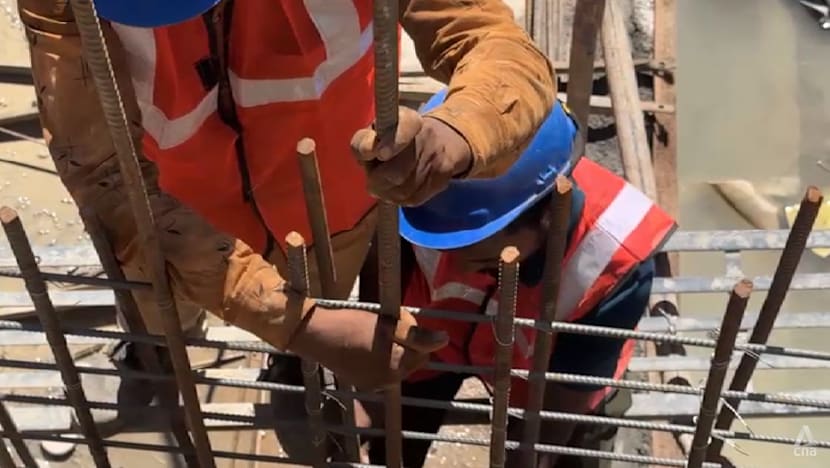
According to property consultancy Anarock, steel prices have risen by about 20 per cent since the Iran war led to disruptions in the Strait of Hormuz.
Home sales in India’s top seven cities – including Mumbai, Bengaluru and Hyderabad – fell by 7 per cent in the first quarter of 2026 from the previous three months, the firm added.
Potential buyers from the Middle East – a key source of investment in Indian real estate – are also pausing purchases for now.
“The dip primarily can be attributed to the sentiment which is kind of on the lower side because of this ongoing uncertainty (due to) the war,” said Prashant Thakur, Anarock’s executive director and head of research and advisory.
He added that the slowdown came on the back of a strong 2025, when both home sales and prices had surged.
HEADWINDS DAMPEN SECTOR’S GROWTH
India’s property market has soared past pre-pandemic levels in recent years, supported by strong demand in major cities.
The sector is also a major pillar of the economy, contributing significantly to India’s gross domestic product and ranking as the second-largest employment generator after agriculture.
Developers are now watching closely to see if cost pressures persist.
If the conflict drags on, analysts warn it could delay construction timelines and slow new project launches across the country.
Companies like Srishti Group are trying to manage the situation by locking in material costs to hedge against further increases.
Ultimately, developers say they may have to increase home prices.
“So far, the endeavour is to absorb the cost. But everybody has a limit, the margins are very thin,” said Thakur, who is also Maharashtra state president for the National Real Estate Development Council, an industry body.
“In today’s world, customers are quite informed, they have a lot of choices. So the prices don’t show these kind of margins anymore, so yes, if this gets extended, I fear the cost will be passed on to the customer,” he added.
There are also concerns that higher energy prices could push up inflation, reducing the likelihood of interest rate cuts and keeping home loan rates elevated.
Real estate developers are already feeling the strain, but if global tensions persist, the impact could soon be felt by homebuyers.