
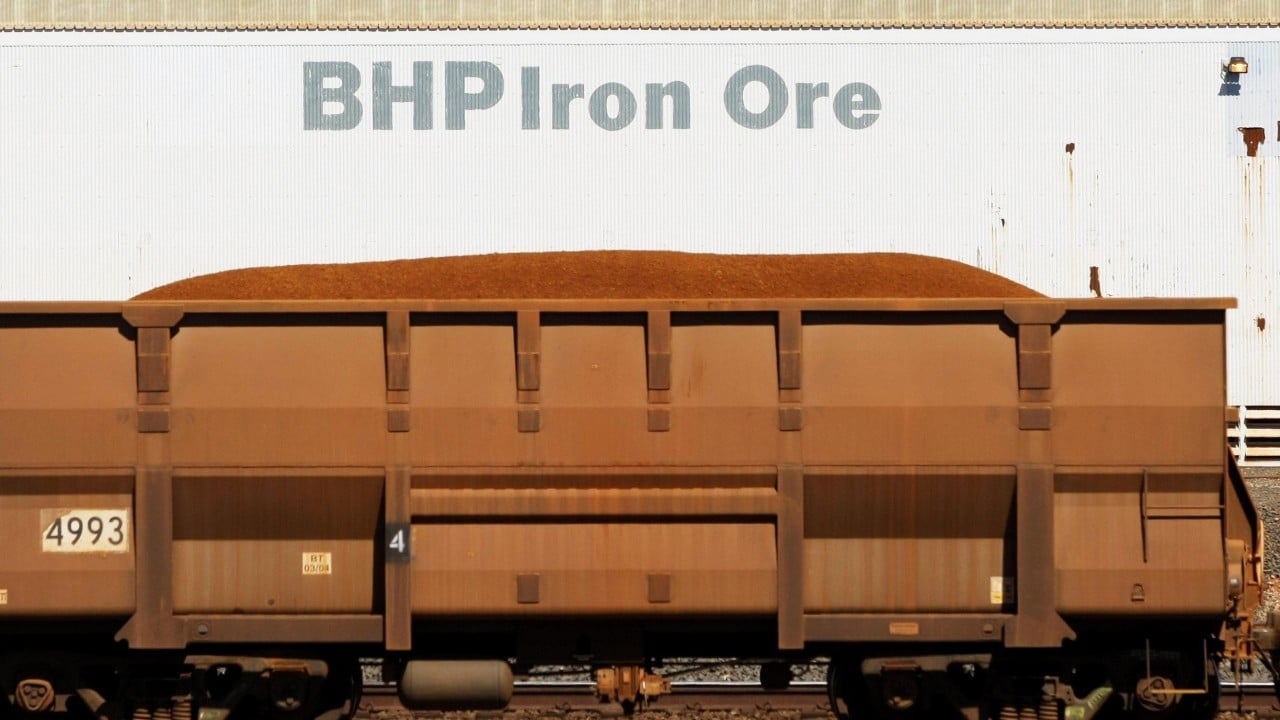
Australian mining giant BHP’s decision to adopt a yuan-denominated index for a major Chinese buyer poses a challenge to the
US dollar’s long-standing dominance in iron ore pricing, delivering a hard-won victory for Beijing, analysts said.
But while the agreement marked a breakthrough in Beijing’s push to gain greater commodity pricing power at a time when the United States faces growing “geopolitical isolation”, analysts stressed that its broader efforts to reshape the old order remained far from complete.
“The agreement marks the first time China’s own market trading data has been incorporated into the iron ore pricing formula, representing a paradigm shift in pricing benchmarks,” said Xu Yidan, a ferrous metals analyst at GF Futures.
“It changes the rules of the trade and strengthens China’s pricing influence in the iron ore market.”
Beijing has pushed the yuan’s internationalisation over the past decade, a campaign now gaining momentum amid growing concerns over Washington’s “weaponisation” of the US dollar and widening geopolitical fault lines. A currency’s global status is typically judged across several metrics, including its role in commodity pricing.
According to BHP’s latest operational review, released on Wednesday, the company had “concluded iron ore sales contract negotiations with the China Mineral Resources Group (CMRG)”.
The deal ends a months-long stand-off that began in September when CMRG – the state-backed agency set up to centralise iron ore purchases – reportedly banned purchases of Jimblebar fines, a medium-grade iron ore, from BHP.
Once one major player accepts it for their flagship product, the commercial (and political) pressure on Rio, Vale and Fortescue gets a lot harder to ignore
Industry insiders familiar with the matter confirmed to the South China Morning Post that CMRG had successfully negotiated yuan-linked pricing for BHP’s Jimblebar fines under a new long-term contract.