



Perikatan Nasional can now contest next month’s Melaka election under its own name and symbol, after securing a temporary legal reprieve from deregistration.

Perikatan Nasional leaders during the 2022 general elections. (File Photo: CNA/Fadza Ishak)
New: You can now listen to articles. 
This audio is generated by an AI tool.

23 Oct 2026 03:26PM
SINGAPORE: Malaysia’s opposition coalition Perikatan Nasional (PN) on Thursday (Oct 22) secured a temporary legal reprieve from deregistration, clearing an immediate hurdle just nine days before nomination day for Melaka’s state election.
But analysts say the court victory may do little to resolve the more fundamental problem of a deepening internal rift within PN, which could ultimately determine whether the coalition has a political future.
PN’s key component parties Parti Pribumi Bersatu Malaysia (Bersatu) and Parti Islam Se-Malaysia (PAS) have increasingly operated separately, including during the recent state elections in Johor and Negeri Sembilan.
The Malaysian High Court on Thursday stayed PN’s suspension and deregistration by the Registrar of Societies (RoS), allowing the coalition to resume political activities while it pursues a judicial review.
The decision comes a month before Melaka goes to the polls on Nov 14 and means PN can contest under its own name and symbol.
“For PN’s long-term future, it takes more than this stay. What’s the point of PN surviving in name but continuing to bicker?” said political scientist Syaza Shukri of the International Islamic University Malaysia (IIUM).
The question has become more pressing as PAS develops closer ties with the United Malays National Organisation (UMNO), potentially leaving former prime minister Muhyiddin Yassin’s Bersatu increasingly isolated.
In Melaka, Barisan Nasional (BN), which is led by UMNO, and PAS have already agreed on a seat-sharing arrangement to contest the state election – the latest sign that Malaysia’s political alliances are shifting ahead of the next general election.

WHAT DID THE COURT DECIDE?
In granting the stay, Justice Azizan Md Arshad said “extraordinary circumstances” warranted the decision, citing the potentially irreversible consequences for PN’s participation in state elections, reported local news outlet The Star.
The stay will remain in effect pending the outcome of PN’s judicial review challenging RoS’s actions. The court has yet to decide whether the suspension and deregistration were lawful.
The RoS cancelled PN’s registration on Tuesday following months of infighting between PAS and Bersatu.
Tensions had become increasingly visible since last December, when eight Perlis assemblymen, five of whom were from Bersatu, withdrew support for the state’s PAS chief minister in a move widely seen as orchestrated by figures aligned with Bersatu president Muhyiddin.
The fallout deepened mistrust between PAS and Bersatu and ultimately preceded Muhyiddin’s resignation as PN chairman.
The dispute came to a head in August when Muhyiddin complained to the RoS that Bersatu had been excluded from a PN supreme council meeting the previous month, in violation of the coalition’s constitution.
The regulator subsequently issued PN a show-cause notice on Sep 22 and suspended its activities the following day. After reviewing PN’s response, the regulator cancelled the coalition’s registration on Oct 20, saying its explanation “failed to refute the grounds for the cancellation of registration”.
PN secretary-general Takiyuddin Hassan had questioned the timing of the decision so close to the Melaka election and vowed to challenge it in court.
IMMEDIATE REPRIEVE FOR MELAKA POLLS
The High Court’s decision has temporarily lifted the threat of the PN losing its common electoral symbol ahead of the Melaka state election on Nov 14.
PN chairman Ahmad Samsuri Mokhtar, who is also PAS vice-president, welcomed the ruling as a positive development in the coalition’s efforts to “defend its rights through legal channels”.
“All election machinery must now focus on the Melaka state polls … Strengthen preparations, enhance cooperation and present the best possible offer to the people. We will continue moving forward,” he said in a statement on Thursday.
Analyst Adib Zalkapli, managing director of Viewfinder Global Affairs, said losing PN’s “recognisable and popular electoral symbol” would have been a “setback” for its component parties, particularly given the coalition’s appeal among Malay-Muslim voters.
“The PN brand has been useful especially in the more multiracial west coast of the peninsula,” Adib told CNA.
Melaka is located on Peninsular Malaysia’s west coast, where the PN brand is stronger than that of PAS, according to Syaza of IIUM.
“This (court decision) is good for PAS and friends except Bersatu in Melaka because they can use PN’s logo,” she told CNA.
In the 2021 Melaka state polls, PN won two seats, both through Bersatu. PAS failed to win any of the seats it contested under the coalition banner.
University Malaya political analyst Awang Azman Awang Pawi said losing the common logo would have affected “campaign consistency, coordination of electoral machinery and the clarity of candidates’ political identities, particularly among undecided voters”.
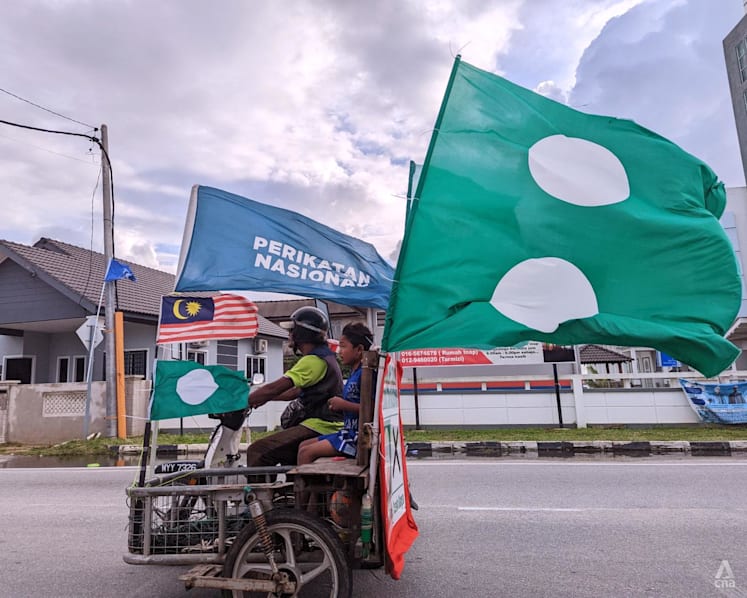
The court ruling however does not necessarily resolve questions over how PN’s component parties will coordinate their campaigns.
Bersatu and the other PN parties have increasingly gone their separate ways.
In August’s Negeri Sembilan election, Bersatu announced its candidates separately and contested under its own symbol, including against PN candidates in eight constituencies.
Bersatu failed to win any of the 24 seats it contested independently, while PN won seven.
PN’s other parties include Parti Gerakan Rakyat Malaysia (Gerakan), Malaysian Indian People’s Party (MIPP) and more recently, Parti Wawasan Negara (Wawasan). Wawasan is led by former Bersatu’s deputy president Hamzah Zainudin after he was sacked in June 2026 amid internal party infighting.
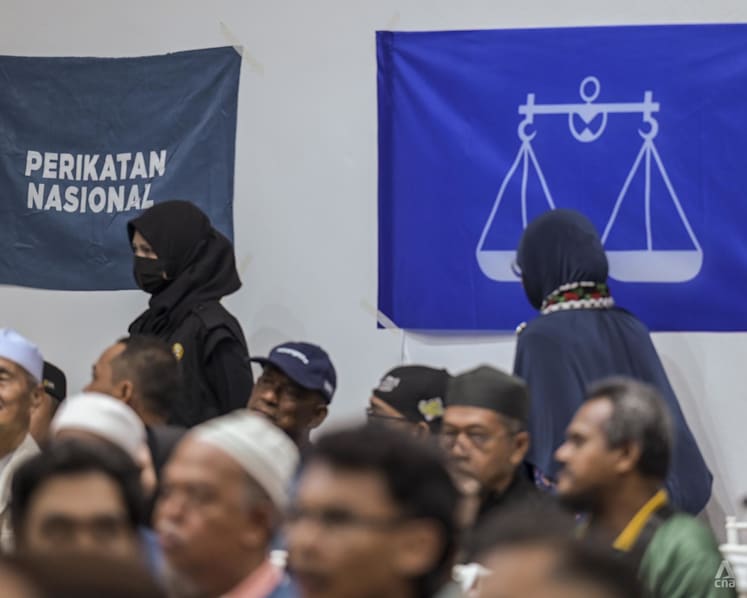
COULD PN’S DIVISIONS ACCELERATE UMNO-PAS COOPERATION?
The divisions within PN come as Barisan Nasional (BN) and PAS deepen their electoral cooperation.
BN, led by deputy prime minister Ahmad Zahid Hamidi, is part of Prime Minister Anwar Ibrahim’s federal unity government alongside his Pakatan Harapan (PH) coalition but ties have come under strain in recent months, with both sides contesting state elections separately.
Following weeks of speculation over a possible electoral pact, BN chairman Zahid said this week that his coalition would contest 21 of Melaka’s 28 seats while PAS and its allies would field candidates in the remaining seven, reported Malay Mail.
BN would use its own logo while PAS and its PN allies would decide which symbol to contest under, he added.
The agreement between the two Malay-based parties follows cooperation in two other state elections.
During the Johor election in July, PAS instructed its supporters to back BN’s candidates in constituencies where PN was not contesting.
The cooperation deepened during the Negeri Sembilan polls in August, when BN fielded candidates in 25 seats and PN contested the remaining 11. Bersatu had contested separately.
Should PN ultimately lose its registration ahead of next general election, analysts say PAS could gain even greater freedom to pursue closer ties with UMNO, while Bersatu could find itself in a weaker political position.
Syaza of IIUM described Bersatu as a “thorn” in the relationship between UMNO and PAS.
Awang similarly said that PAS would have “greater room to determine its political direction” as Bersatu faces the risk of losing bargaining power if it no longer has access to PAS’ organisational support and voter networks during seat negotiations.
Adib of Viewfinder Global Affairs said that BN, and UMNO in particular, could emerge as the “biggest beneficiary” if PN were to lose its formal electoral platform.
“Without PN, UMNO through the BN coalition has a stronger case in seat negotiation process with PAS and Wawasan (of PN) as BN is obviously the stronger brand compared to (both parties) in the west coast,” Adib told CNA.
“It could weaken the opposition’s ability to mount a coordinated challenge against BN,” echoed Awang of UM.

Beyond the potential political realignments ahead of Malaysia’s next general election, analysts also questioned whether PN’s legal reprieve would be enough to secure its long-term political future.
“Even if PN makes it sound like they want to challenge the deregistration, they still haven’t come up with an acceptable solution about the impasse with Bersatu,” said Syaza.
Awang similarly said that restoring PN’s registration would not necessarily resolve disputes over leadership, power-sharing and trust among its component parties.
Syaza suggested that the remaining component parties could instead pursue a “looser arrangement”, allowing them to coordinate seat allocations without being weighed down by their partners’ political baggage.
Awang said the developments reflected the fragility of political coalition structures and the growing flexibility of political alliances in Malaysia.
“Malaysian politics is moving towards more fluid and pragmatic alliances driven by electoral interests rather than permanent coalition loyalties,” he added.
Despite PN’s legal troubles and internal divisions, Awang stressed that voters had not necessarily abandoned the opposition.
“What has been affected is the structure of political coordination, not necessarily the underlying base of public support,” he said.
The changing political landscape came ahead of several key elections. Besides Melaka, Sarawak’s state assembly is expected to be dissolved soon.
Malaysia’s 16th general election must be held by February 2028, although Prime Minister Anwar Ibrahim has said he is open to considering calls for an earlier vote.