
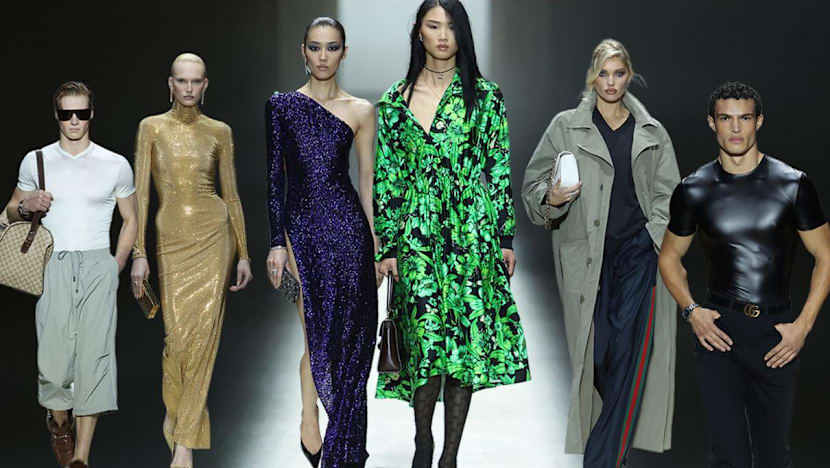
Only one show mattered at the latest Milan Fashion Week. After months of anticipation and years of crisis management, Gucci, the legendary Italian luxury house, brought spray-on skinny jeans and seamless mini dresses to the catwalk in a bid to reinvent its brand.
The latest push is a crucial one for Gucci and Kering, its parent group, whose operating profits have slid by two-thirds in two years. But it also comes at a moment of truth for the industry as a whole. Big Luxury, for years one of Europe’s best performing sectors, is trying to find its way again after its post-pandemic boom turned sour.
As Gucci’s first models came down the runway at the Palazzo delle Scintille in bandage dresses, logo tights and bareback attire cut far below the waist, there was a collective intake of breath. Could this really be the answer to the travails of one of the biggest names in the business?
Now, as the sector tries to increase its excitement and allure to contend with a changing market, slowing Chinese demand and diminished cultural cachet, the economic consequences of the Iran war have deepened its challenges still further.
“In February and early March, I was feeling very good — now who knows what will happen?” says a luxury industry chief executive, as he worries how the war will change the shopping habits of customers more concerned about their net worth than their utility bills.
“The Middle East impact is not about the revenues there, it’s about confidence, inflation, interest rates . . . The doomsday scenario is if this drags on, or worsens . . . once it starts to hit [clients] in the balance sheet.”
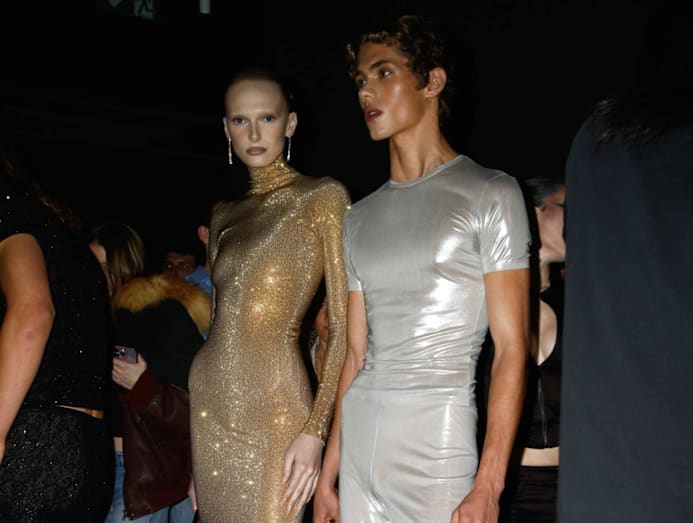
Speaking after Gucci’s Milan show in February, Luca de Meo, the CEO who came to Kering from the car industry, acknowledged a long road ahead for his group, which he said was just “starting a path” but “going in the right direction”.
Investors seem to lack his confidence. Last week Kering’s shares fell, as did those of its rivals LVMH and Hermes, after all three reported that the Iran conflict had dented their first-quarter revenues.
As Iranian missiles hit hotels in Dubai and shuttered airports across the Middle East, tourism and shopping cratered, especially in the UAE, the region’s hotspot for luxury sales.
In March, international flights to and from the Middle East were down by two-thirds, according to data from Citi, hitting sales in airports known across the world for their luxury retail concessions.
So far this year, nine leading European luxury stocks have lost at least a collective €140 billion (US$164.55 billion; S$209.37 billion) in market capitalisation, a bitter blow for an industry that was riding high during the first half of this decade, when LVMH was the continent’s most valuable company.
There are signs of recovery under way, but experts agree that the sector’s problems go deeper than the disruption caused by the war.
“Consumer sentiment remains weak and the industry has yet to finalise its homework: from creative renewal to correcting excessive pricing and scaling back overexpansion across categories and geographies,” says Achim Berg, founder of the think-tank FashionSights.
“Many luxury decision makers did not expect a recovery in 2026 in any case. The risk now is that the Iran war becomes a convenient excuse — or a fig leaf.”
The luxury sector, which supersized between 2019 and 2023, was already grappling with some hard truths before the conflict began.
Middle-class shoppers who previously spent tens of billions of dollars on luxury items pulled back once their COVID-era savings and furlough payments ran out and the cost of living rose.
Some 50 million luxury consumers exited the market between 2022 and 2024, according to a report by Bain, most of them aspirational shoppers who felt left behind by skyrocketing prices.
“The reality is that during the pandemic, millions of people who should never have been luxury customers bought items from these companies for the first time,” says one investor in the sector. “Most of them are likely not coming back.”
Industry executives say despite recent volatility, long-term fundamentals remain solid. In the two decades to 2020, the sector boasted growth rates of about 5 per cent per year, according to McKinsey.
“There is nothing that makes us think that over the long term the demand for exceptional goods is in decline — there is more wealth in the world, not less,” says Joel Hazan, head of strategy at Kering. “It’s really a supply-driven market. When you have good stuff, people want it.”
But the last few years have still been a rude awakening for many. Bolstered by booming demand, notably from Chinese shoppers, many brands massively raised prices in order to speed up growth.
That worked very well for a few years, before eventually alienating all but the wealthiest shoppers. HSBC data suggests that the average price of luxury goods in Europe has risen by roughly half since 2019. Brands often charge a mark-up of eight to 12 times on the production cost of their goods, according to Bernstein estimates.
In particular, the Chinese market, the motor of growth until 2023, has been hit by relatively weak consumption in the pandemic’s aftermath.
While LVMH this week reported its best quarter in the country for three years, Chinese spending on luxury goods remains fragile, reflecting sentiment about the economy. Shoppers are much more selective.
As Kering’s de Meo set out a turnaround plan, he acknowledged the need to rebuild his brands’ reputation in the world’s second-biggest economy.
“China has been used as a bit of a trash bin, a place where Gucci looked for easy growth,” he said. Now, by contrast, he added, the country “is becoming a very sophisticated luxury market, very discerning about what is good and bad”.
Kering is also investing in the parent of China’s cashmere specialist Icicle, as homegrown luxury brands gain traction among the country’s fashionistas.
“We want to understand what’s going on there,” de Meo added. “I know what it means to neglect the innovation power of China, coming from the auto sector. Before the executives here in Europe understood how powerful the Chinese auto industry was, it was too late.”
The industry has also suffered from a broader hit to its reputation. Over the past two years, a Milan prosecutor’s investigation into alleged labour abuses in luxury supply chains in Italy has undermined one of the business’s chief selling points: the idea that soaring prices are justified by exceptional craftsmanship and rigorous oversight.
In a process that has now ended, top brands including Dior, Armani, Valentino and Loro Piana were placed under a court-appointed administrator to clean up their supply chains. The brands said they had no knowledge of the practices and moved quickly to co-operate with officials.
Loro Piana said on Friday (Apr 17) it had conducted thousands of audits across its network over the past two years and had terminated more than 100 contracts with suppliers and subcontractors as a result — actions that led the Milan court to praise its “virtuous path” and “commitment”.
Similarly, the Prada group — which was not involved in the investigation — told the FT this year that it had conducted thousands of audits in recent years, leading to hundreds of terminations.
But such cases have left their mark all the same. “The scandal might have had limited impact judicially, but it has cast a dark cloud on the industry and whether the image sold to consumers matches the reality of how luxury goods are made,” says a brand consultant in Milan, speaking on condition of anonymity.
Some groups hope to benefit from the sector’s recent turmoil.
Harrods, the premium London department store, says it is preparing for a bumper summer as Middle East clients relocate to the UK. Italian jeweller Ferri Firenze says its pop-up in Qatar’s Place Vendome mall is performing so well with local clients that it has prolonged operations three times despite the decline in tourists.
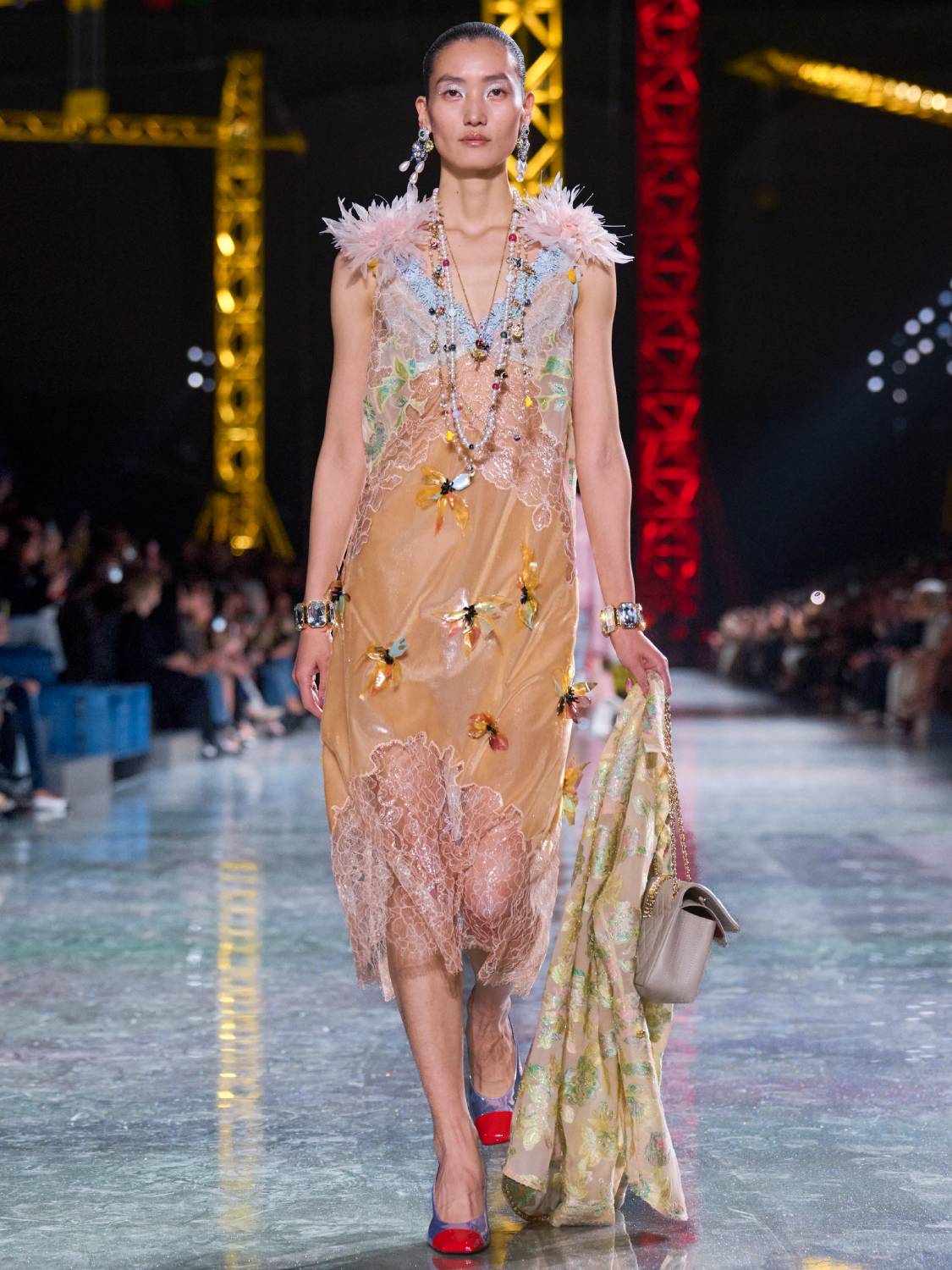
Fine jewellery has remained resilient during the past three years, driven by demand from Americans keen to snap up Cartier Love bracelets and the Van Cleef & Arpels’ Alhambra range of baubles.
LVMH’s CFO Cecile Cabanis said this week while Middle East demand is still “very down”, she expected spending to pop up elsewhere. “Wealth hasn’t evaporated,” she added.
Some brands, such as Hermes, have been more consistent in their pricing policies than their competitors — with some handbag styles starting at €10,000 — and so need to adjust their strategy less.
Others, such as Chanel, previously widely criticised for outsized price increases, have also started to offer new products between €1,000 and €3,000 — the lower end of the range — with smaller leather goods and simpler bags.
Even for the main brands caught up in the Italian crackdown on supply chains, such as Loro Piana and Valentino’s accessories unit, judicial administration has now ended.
That is the backdrop to luxury groups’ bid to claw back sales via a vast reshuffle of designer talent. Gucci’s February show was the first to be masterminded by Demna, a Georgian fashion designer who left Balenciaga — also a Kering brand — last year.
Almost every other big name in the business has recently installed a new creative director too, from LVMH brands such as Dior, Celine and Loewe to Chanel.
At present the industry is on tenterhooks, as it waits for the results of the infusion of fresh blood.
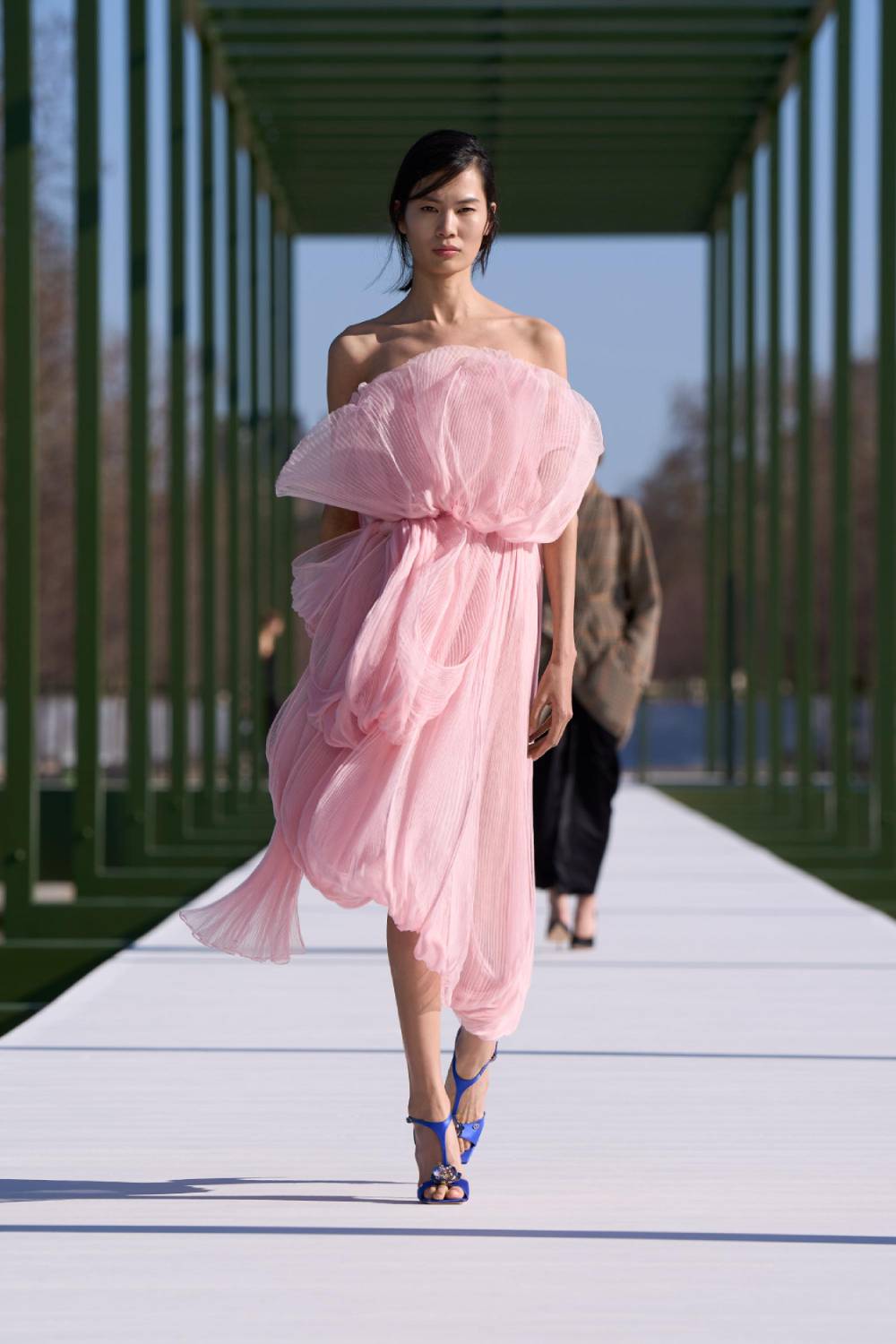
Most collections go on sale roughly six months after they are first shown on a runway, meaning many new designers’ visions for brands are only landing in stores now. (A selection of Gucci bags, shoes and belts from the February show were made available for purchase straight afterwards.)
Some new designers, like Matthieu Blazy at Chanel, have hit their mark. Social media posts depicting long lines outside boutiques and sellout shoe and bag styles have made the privately owned French luxury company the envy of many peers.
LVMH says Jonathan Anderson’s new collections for Dior were well received by clients. For others, reception has been more muted, even as executives grow ever more impatient for faster growth.
Speaking after Gucci’s show, de Meo made clear who holds the fortunes of the sector in their hands at a time when brands are being forced to adapt to a new normal. “It is,” he said, “the customer who will judge.”
By Adrienne Klasa, Elizabeth Paton and Silvia Sciorilli Borrelli © 2026 The Financial Times.
This article originally appeared in The Financial Times.
Source: Financial Times/bt