
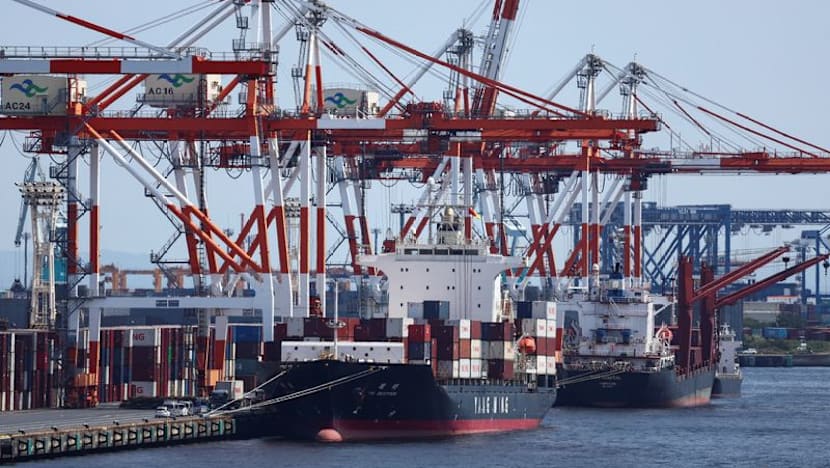
TOKYO: Japan’s exports rose for a seventh straight month led by demand tied to artificial intelligence that has for now blunted the impact of trade disruptions caused by the Middle East conflict, government data showed on Wednesday (Apr 22).
“Overall trade continued to be driven by demand from data centres for artificial intelligence,” said Koki Akimoto, an economist at Daiwa Institute of Research.
“Looking ahead, AI-related demand is likely to remain firm, but with some impact from the Middle East situation coming through, I think the outlook is more or less flat for now,” he said.
Total exports by value rose 11.7 per cent year-on-year in March, data showed, more than a median market forecast for an 11 per cent increase.
Imports grew 10.9 per cent in March from a year earlier, compared with market forecasts for a 7.1 per cent increase, as the impact from oil supply disruptions caused by the effective shutdown of the Strait of Hormuz has yet to fully filter through.
Japan recorded a trade surplus of 667 billion yen (US$4.18 billion) in March, smaller than a forecast surplus of 1.1 trillion yen.
Beneath the headline strength, however, strains linked to Middle East war are emerging.
Exports to the region plunged 45.9 per cent from a year earlier, dragged down by a 36.8 per cent fall in automobile shipments, though the impact was offset to a degree by a 3.4 per cent increase in exports to the United States and a 17.7 per cent jump in shipments to China.
Japan’s economy has continued to show signs of a modest recovery, supported by firm business investment and resilient exports, although growth momentum remains uneven amid external headwinds.
Analysts warn that rising oil prices could weigh on the economy by pushing up import costs and squeezing household purchasing power in an economy heavily reliant on energy imports.
Manufacturers are growing increasingly concerned that surging energy costs and supply disruptions for oil and other inputs could slow Japan’s export engine. Disruptions to supplies of naphtha, a key petrochemical feedstock, have already forced some companies to slow production in recent weeks, despite government assurances that stockpiles are adequate.
“If uncertainty over the Middle East situation persists, there is also a risk that capital investment could be curtailed not only in the Middle East but elsewhere as well, which could weigh on exports of capital goods,” Daiwa’s Akimoto said.
The Bank of Japan is widely expected to keep interest rates unchanged at its next policy meeting next week, while maintaining a tightening stance as a weak yen and higher energy costs add to inflationary pressure, complicating the central bank’s efforts to balance price stability with economic growth.