
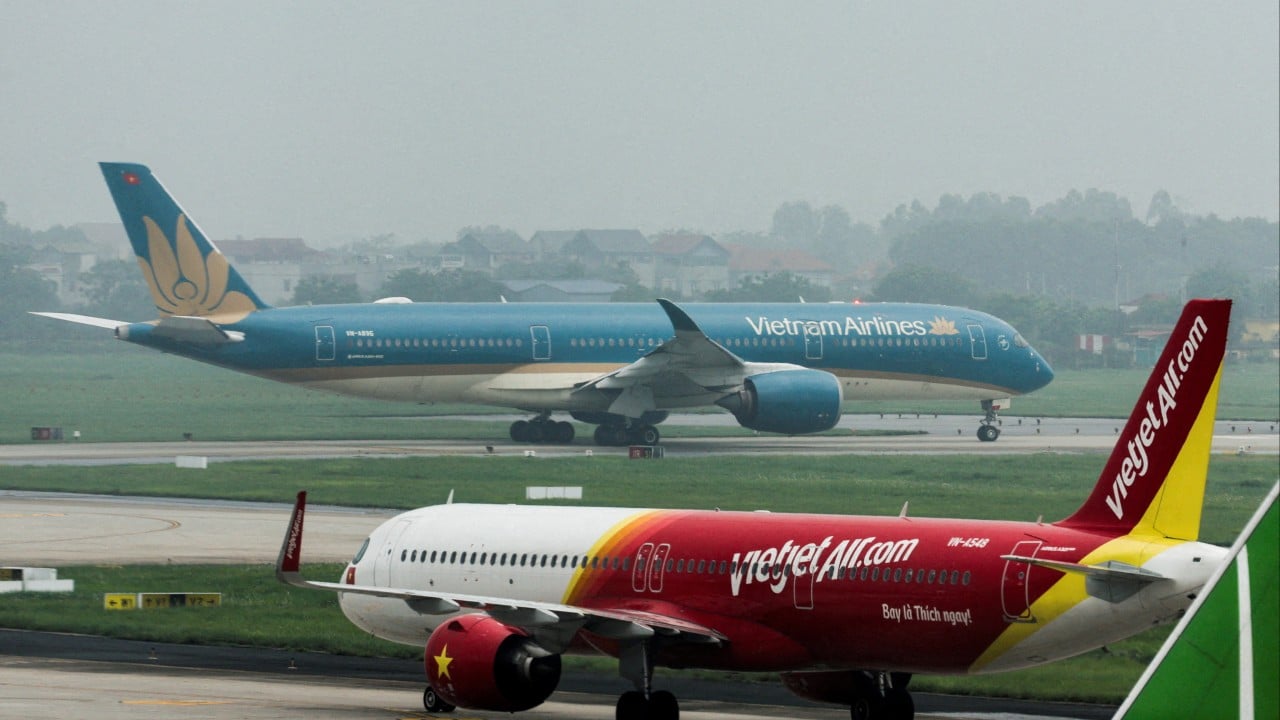
Jet fuel shortages and surging prices are forcing flight cancellations across the Asia-Pacific, a squeeze that could intensify after the United States began controlling oil shipments through the Strait of Hormuz following failed peace talks with Iran.
Tehran’s
effective closure of the strait – a chokepoint for about 20 per cent of global oil supply – is hitting regional airlines, particularly in countries without strategic energy reserves, analysts said. Jet fuel reached nearly US$198 in the week ending on April 10, about double pre-war levels, according to the International Air Transport Association (IATA).
As costs rise and supplies tighten, airlines across the Asia-Pacific are cutting capacity. In Manila, Philippine Airlines said on its website it was “working to minimise disruption” and would review five suspended routes as “conditions improve”.
Vietnam’s civil aviation authority said in March that flagship carrier Vietnam Airlines had cancelled 23 flights per week, while Air New Zealand announced on April 7 that it had made “consolidations” affecting about 4 per cent of flights and 1 per cent of its passengers.
Pakistan International Airlines has scaled back flights to Beijing, Kuala Lumpur and parts of the Middle East because of higher fuel costs, while passengers in South Korea face cancellations through May, according to local media.
The price spike reflects tightening supply – and those disruptions could deepen after Washington started blocking traffic at Iranian seaports on Monday.
“The Asia-Pacific region is particularly vulnerable to jet fuel shortages due to the high reliance on oil shipments from the Middle East,” said Rajiv Biswas, CEO of research firm Asia-Pacific Economics in Singapore.

05:36
Will the war in Iran leave Asian airlines grounded?
Will the war in Iran leave Asian airlines grounded?
“Soaring jet fuel prices have also caused significant flight cancellations among a growing number of Asian airlines, notably low-cost budget airlines,” he added.
The worst-hit countries lack strategic long-term fuel reserves and are heavily dependent on imports. Potential alternative suppliers such as China were prioritising domestic needs by keeping supplies at home, analysts said.