
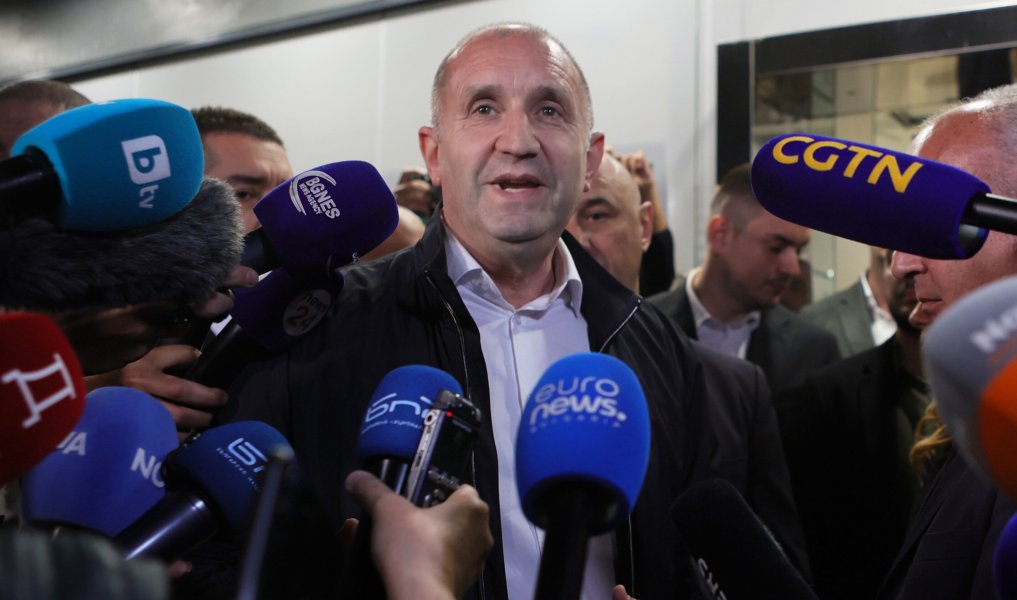

For the eighth time in just five years, Bulgaria voted in a new government on Sunday. This time, however, there was a clear result: the new centre-left coalition Progressive Bulgaria, headed by former president Ruman Radev, won an absolute majority with around 45 percent of the vote, while former prime minister Boyko Borisov’s conservative Gerb Party secured just 13 percent. Will this bring a shift in Bulgaria’s attitude to the EU?
Open/close all quotes
Borisov gone but his system remains
Bulgarians saw Radev as their only chance to get rid of Borisov, e-vestnik postulates:
“Radev’s pro-Russian majority in parliament does not reflect the actual balance of power in society. Until now, the defenders of Russia, the aggressor, had held around a third of the seats in parliament. Now, however, the desire of the majority of the population to oust Borisov has brought Radev victory. … Many who voted for him will soon be disappointed, but there will be no snap election any time soon. There is much to suggest that Radev will follow in Orbán’s footsteps and take his place alongside Fico in the European family. And that he will merely replace Borisov, rather than dismantling the system he created.”
Europe’s new vetoist
La Repubblica voices a fear:
“Bulgaria could become the new Hungary. At least in its role as a thorn in the side of the EU and as Putin’s ‘fifth column’. Rumen Radev, leader of the new ‘Progressive Bulgaria’ party – which is clearly sovereignist and pro-Russian in orientation – has emerged victorious from the parliamentary election. His stance was anti-Ukrainian from the start of his campaign. If Radev succeeds in forming a government, the greatest danger – one that has the EU on high alert – is that he will become a ‘veto man’, just like Orbán.”
A toothless Orbán
Rzeczpospolita editor-in-chief Bogusław Chrabota sees no cause for concern:
“Most European observers are calling Rumen Radev the new Viktor Orbán. Primarily because he likes to criticise Brussels and flirts with Russia. But it’s interesting that when asked, Radev describes himself as the Bulgarian Péter Magyar, even though it’s not entirely clear if this is just an PR trick aimed at distancing himself from a leader who is now associated with political defeat. … As prime minister, Radev might be a mild eurosceptic, but he will hardly rock the EU boat. A toothless Orbán.”
Successfully posing as a rebel
For Corriere della Sera, it’s clear how you win elections in Bulgaria:
“Radev rose to power on the back of his promise to fight corruption and the ‘mafia state’ that is hollowing out Europe’s poorest country. Despite having been a top-ranking politician for decades, he managed to rebrand himself as a rebel by riding the wave of anti-corruption protests that brought down the government in December – for the seventh time in five years. This campaign was actually spearheaded by the pro-European liberal party, which subsequently lost support after Radev blamed them for the high cost of living because they had argued in favour of introducing the euro.”